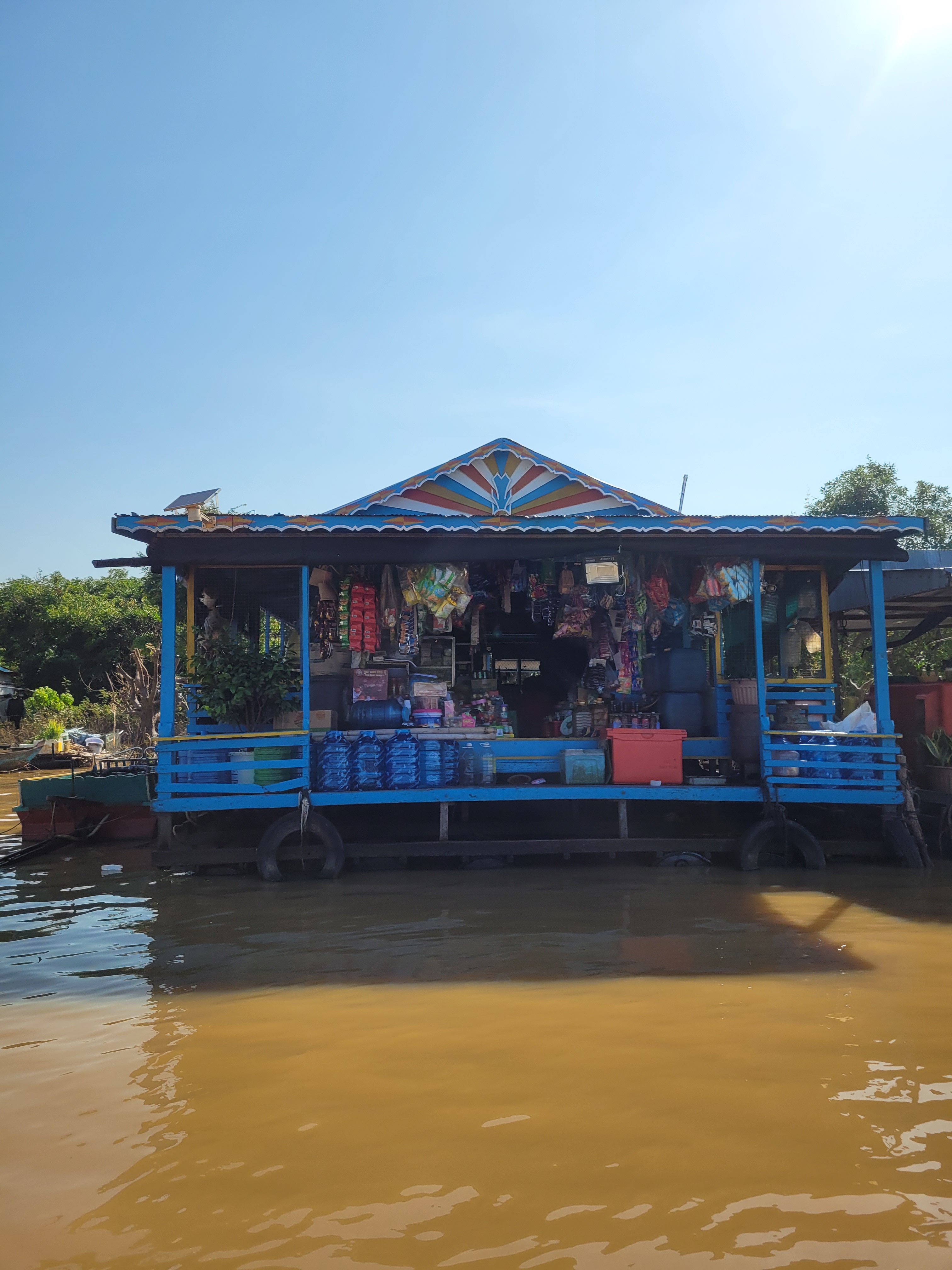
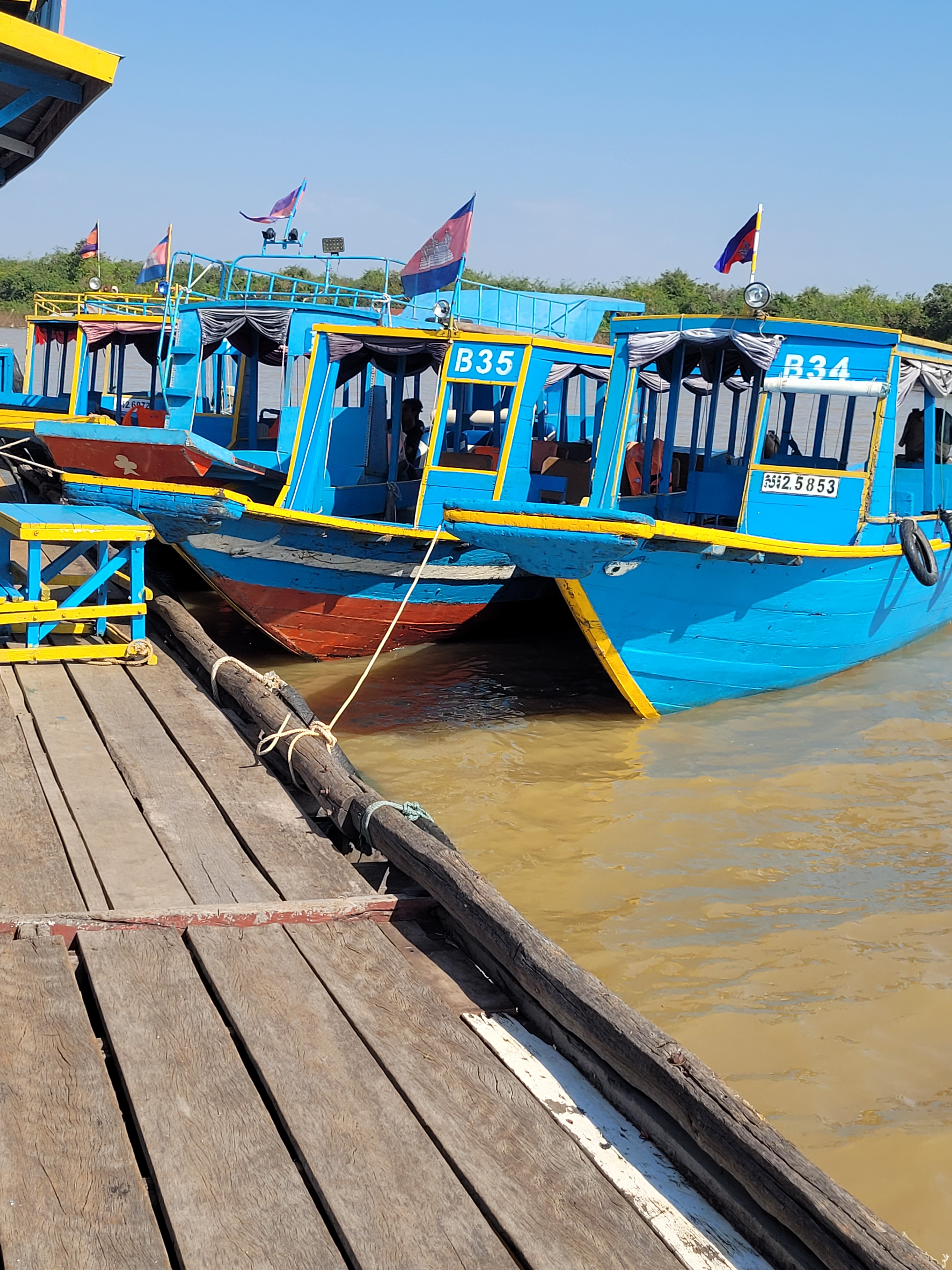
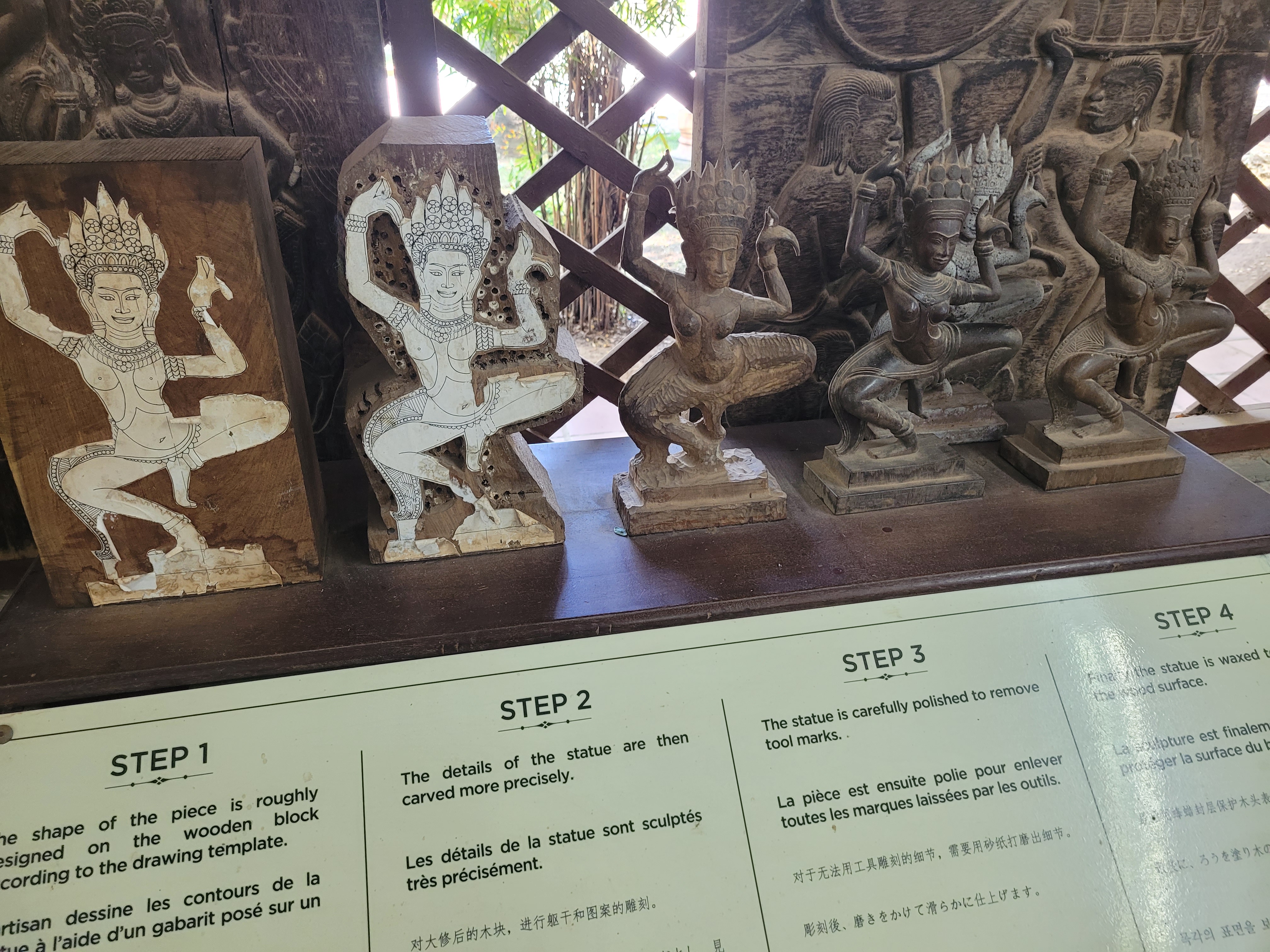
The Scamp in Siem Reap, Cambodia

While my time in Vietnam was short, my time in Cambodia was shorter. On December 26th I took a short flight from Ho Chi Minh City to Siem Reap.

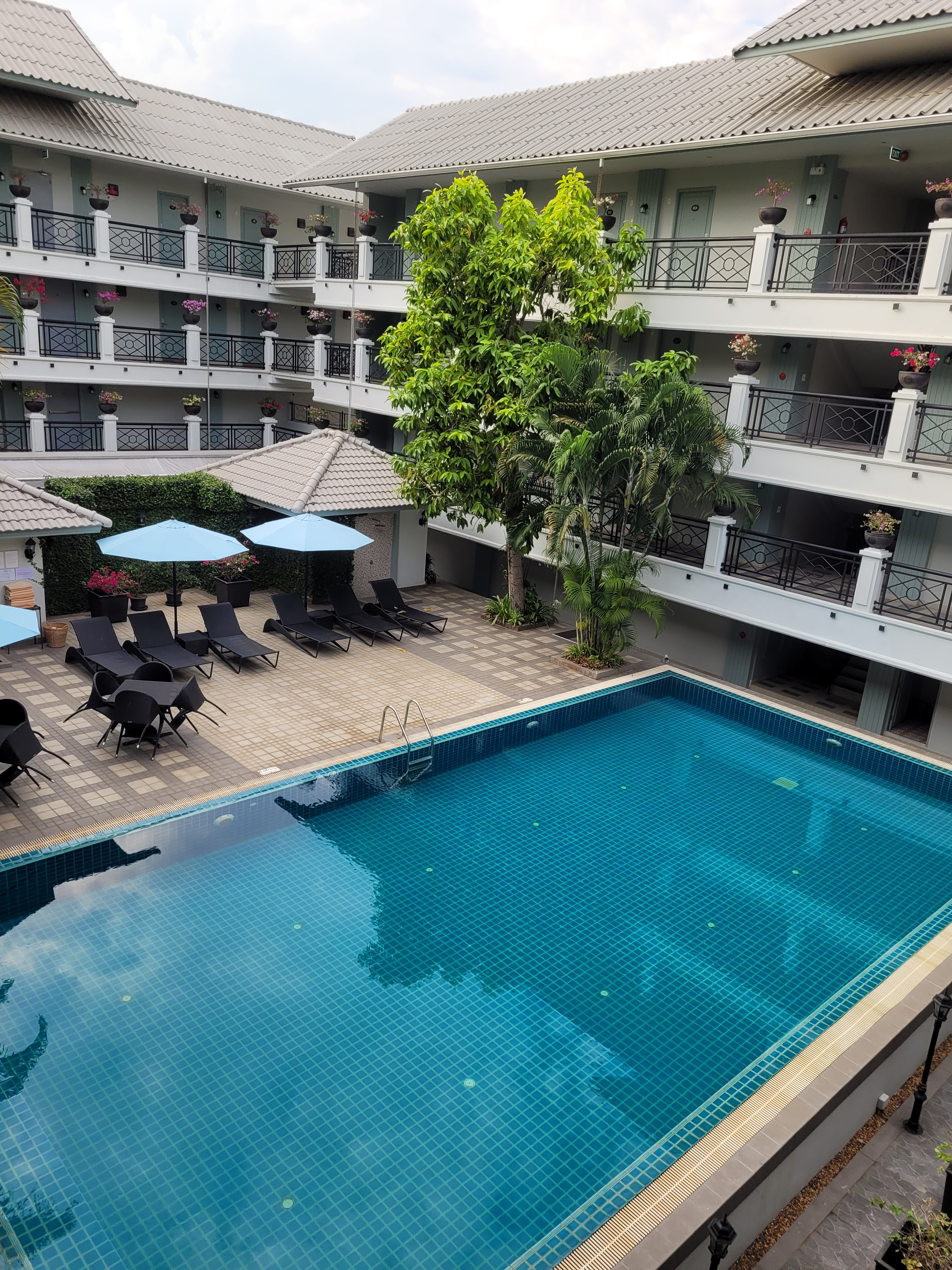
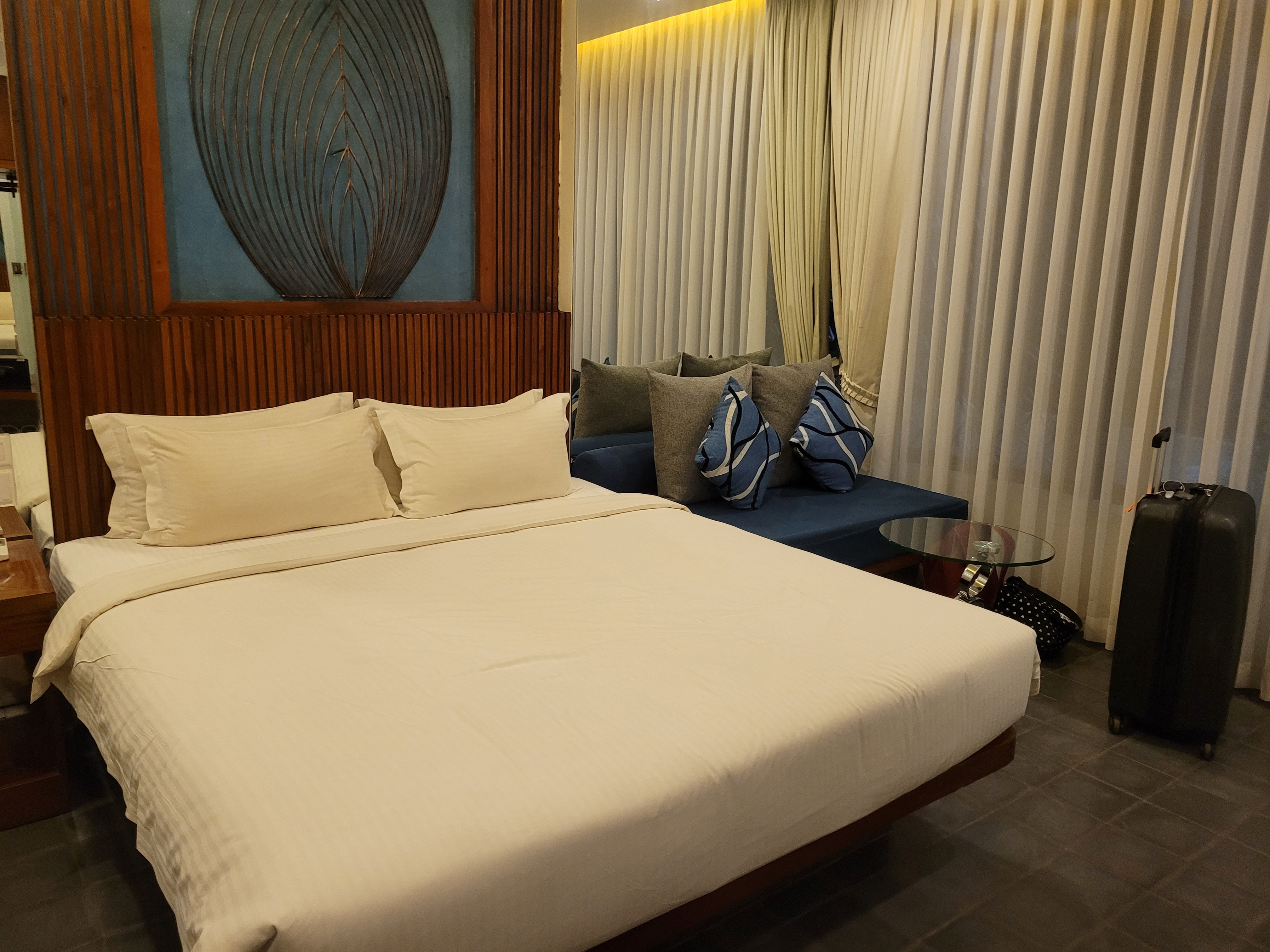
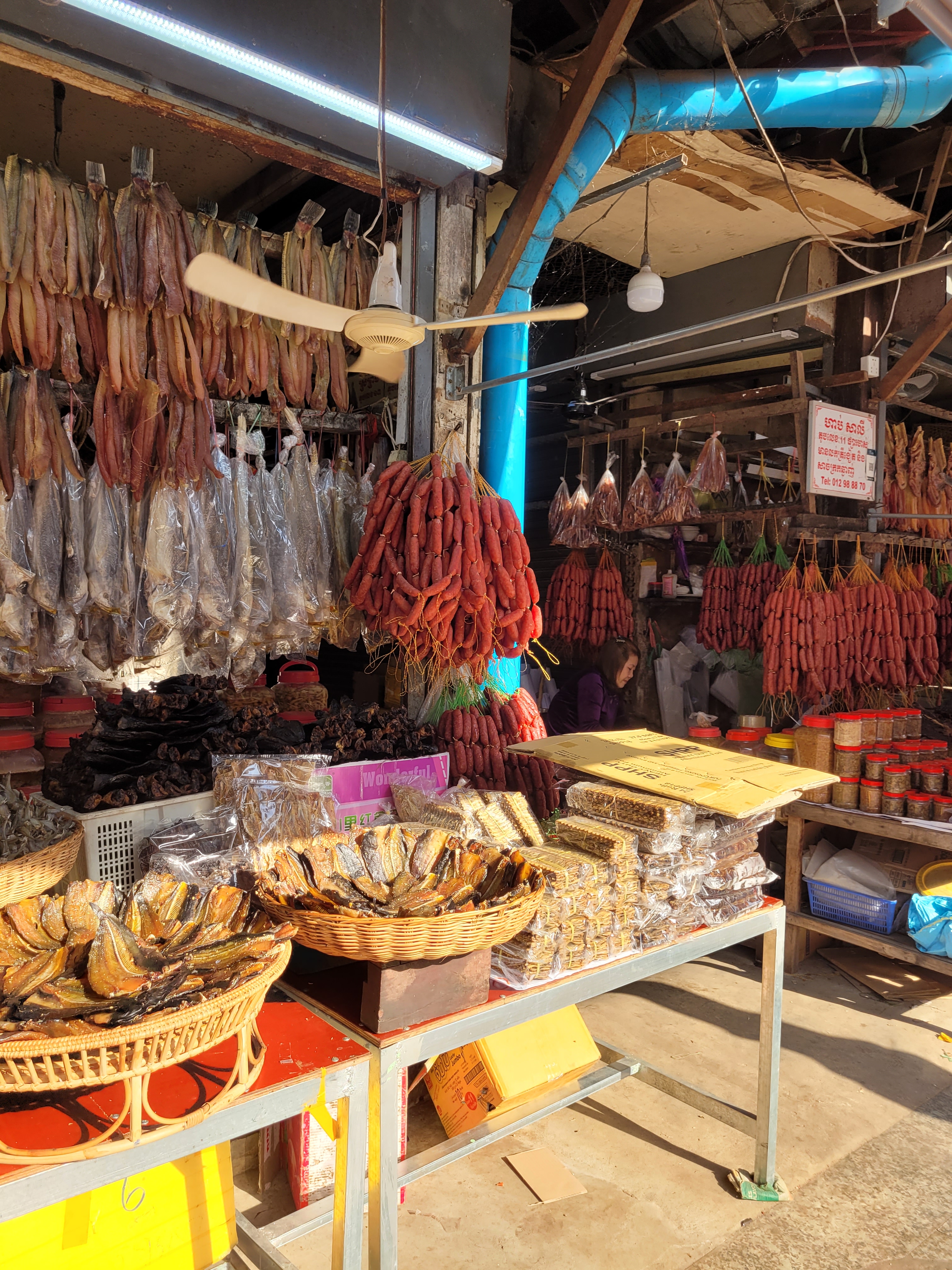
Siem Reap is the second largest city in Cambodia and is known for its proximity to Angkor Wat. I got there in the afternoon and was greeted at the airport by my private guide and driver. They took me to the Hari Residence, a luxury spa and resort just a short walk from the main market. I spent some time relaxing by the pool and wandered to the market. In true Kim fashion, I got a bit lost on the way to the market, but it let me see a bit of the city that was off the tourist path.

The hotel room was super luxurious and had the best bathtub I’ve ever seen. The room service was amazing and the food was perfection. Cambodia was the part of the trip that I was most looking forward to. I really wanted to visit Angkor Wat, and when I was looking on Tour Radar for trips to this part of the world, the visit to Angkor Wat was part of what sold me on the booking.

After the best bath and a good night’s sleep in a massive comfy bed, my guide picked me up for a day at the Angkor complex. The day started off a bit rocky because my phone was not fully charged, which meant that my phone and my mini charger were not fully charged. I was a bit panicked that I wouldn’t be able to get as many photos as I wanted, but by some miracle, my phone lasted the whole day. And what a day it was.

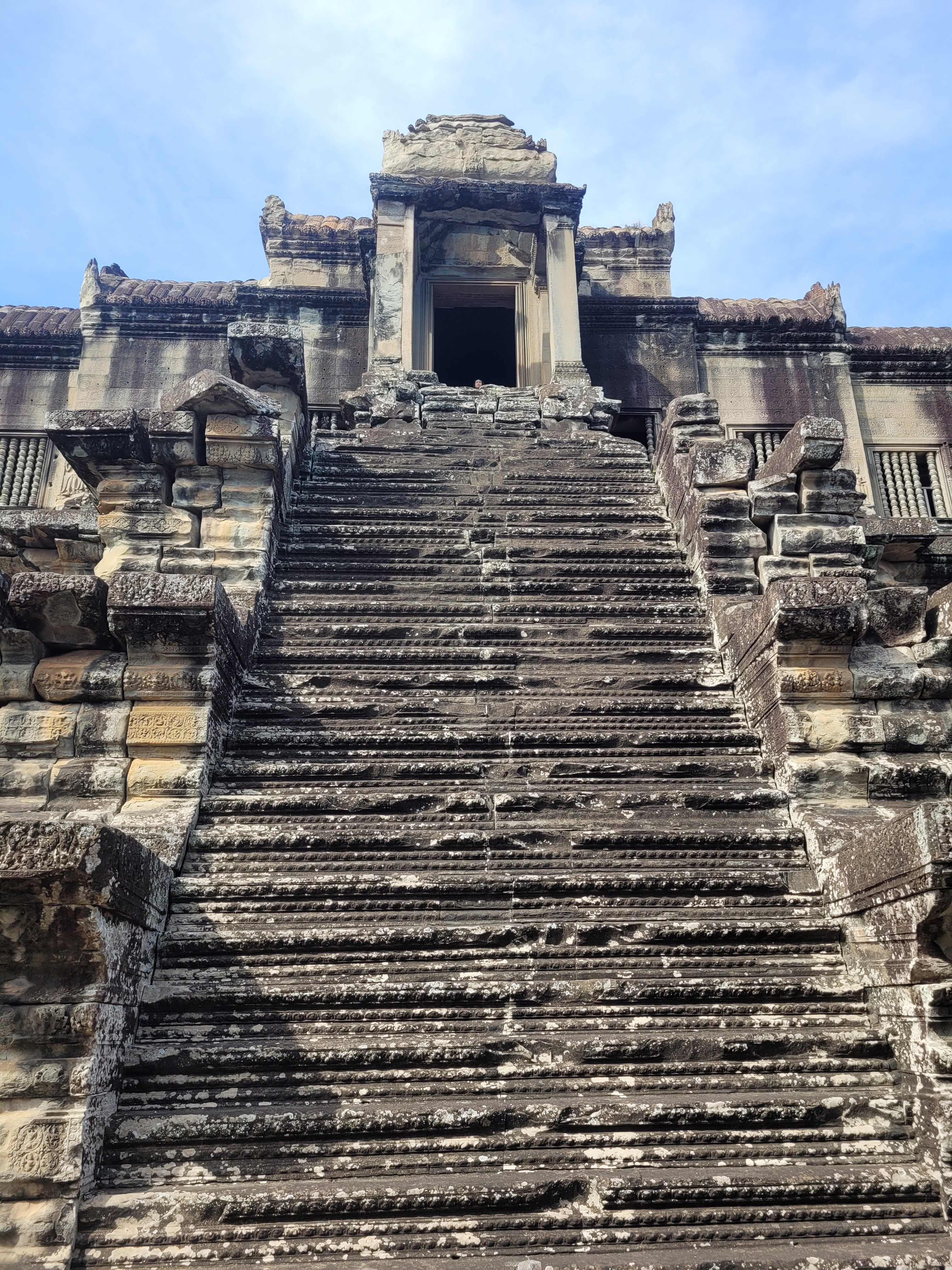
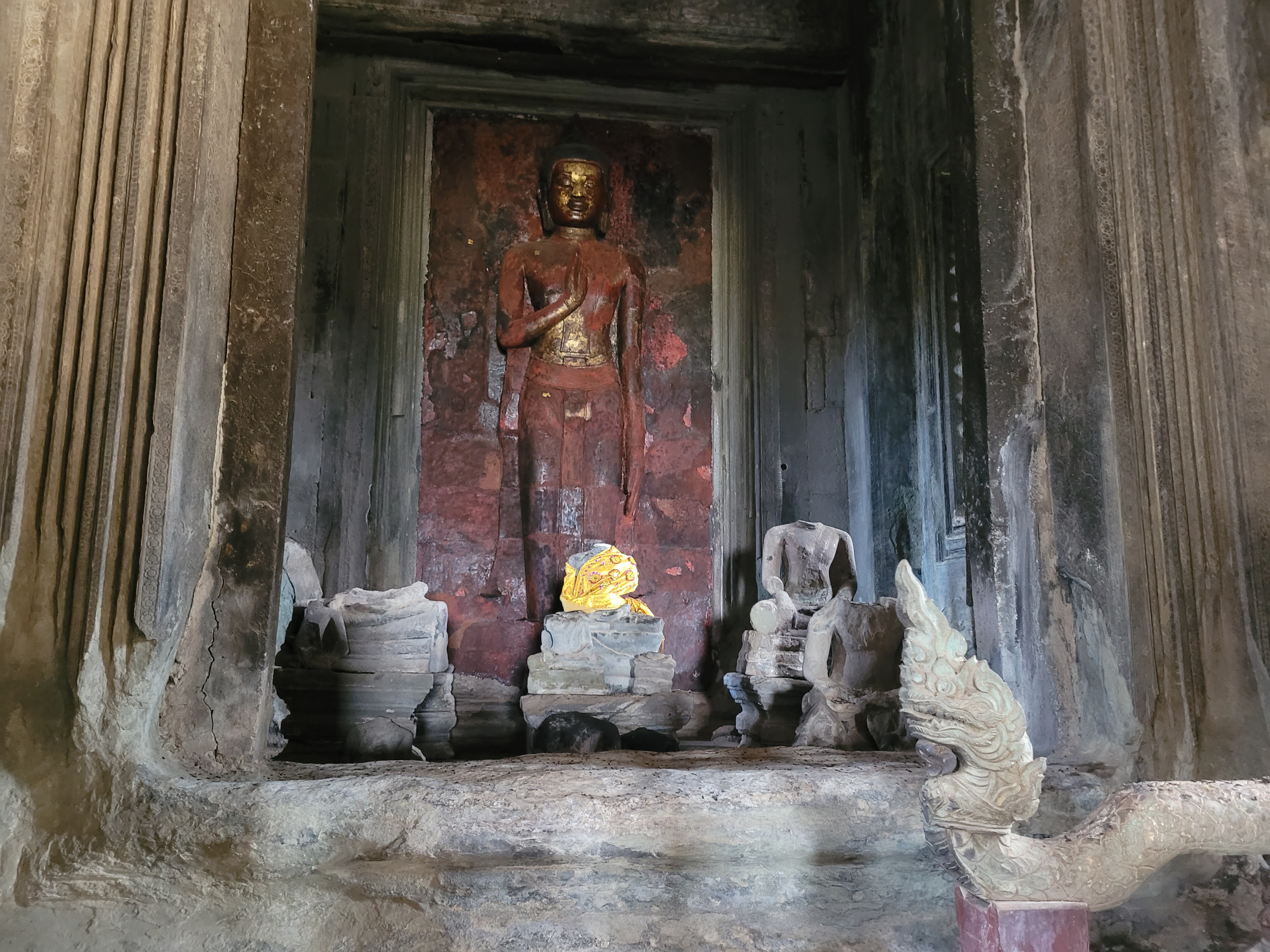
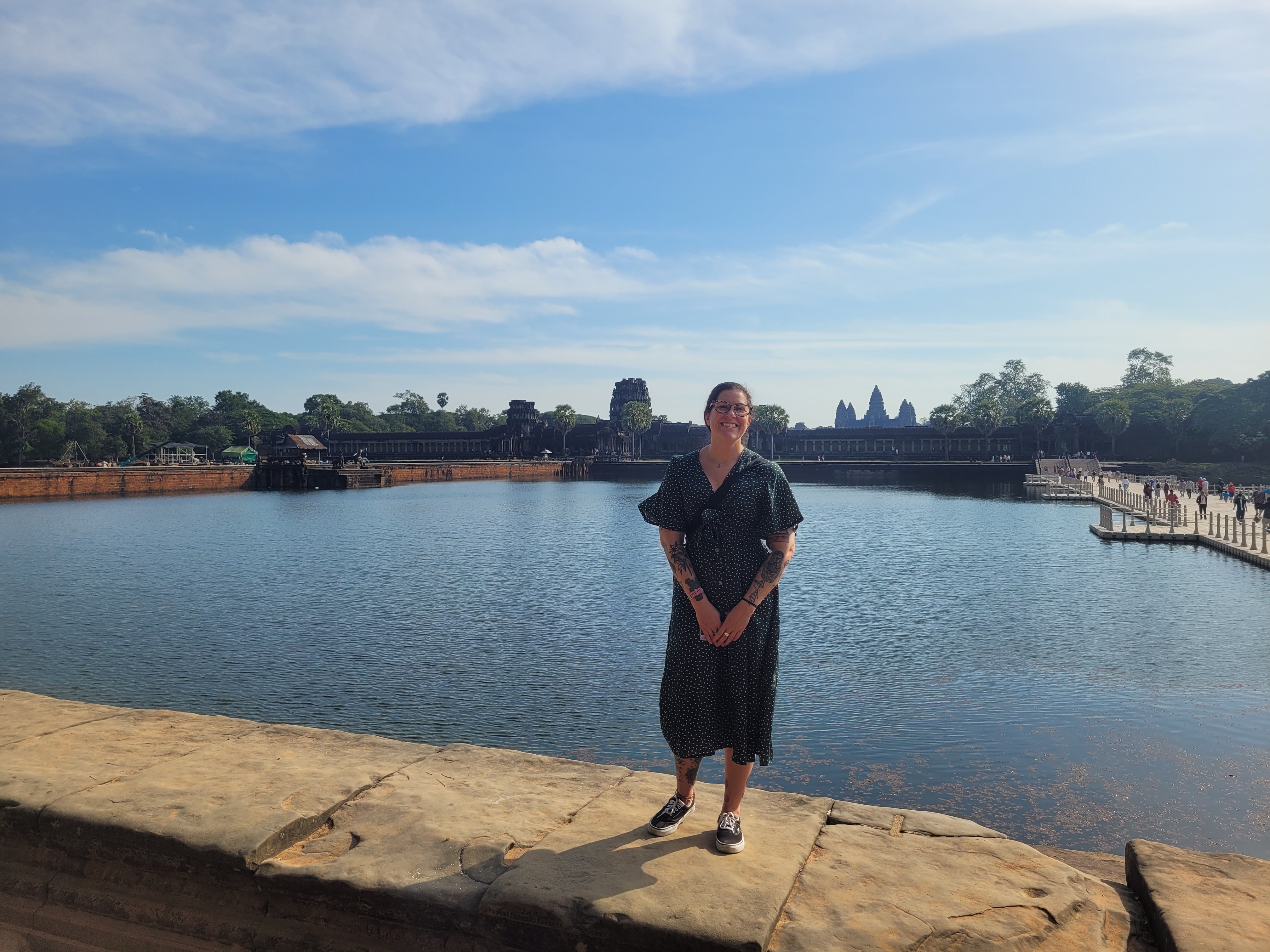
Angkor Wat is a Hindu-Buddist temple first built in 1150 and sits on over 400 acres. It is considered the largest religious structure in the world by the Guinness Book of World Records, and is on the official flag of Cambodia. The temple is a representation of Mount Meru, which is considered to be the centre of the spiritual and physical universe in the Hindu religion.

and I had a private tour. Yes, a private tour of the amazing structure. I wish I could remember the name of my guide. He was a soft-spoken man in his 40s who had been in the army. He was tall and had a weathered look about him, like he’d spent his life in the harsh sun. He talked to me the whole time we were in the temple and he was an endless font of knowledge. I was enthralled as we walked past the walls of stories etched into them. The etchings are beautiful and there are so many things to look at as you move through the galleries. I wish I had taken better notes and written down some of the things that my guide said, but because I was so absorbed in just being there, a Wikipedia explanation of the decoration will have to do.

Integrated with the architecture of the building, one of the causes for its fame is Angkor Wat’s extensive decoration, which predominantly takes the form of bas-relief friezes. The inner walls of the outer gallery bear a series of large-scale scenes mainly depicting episodes from the Hindu epics the Ramayana and the Mahabharata. Higham has called these “the greatest known linear arrangement of stone carving”.[71] From the north-west corner anti-clockwise, the western gallery shows the Battle of Lanka from the Ramayana, in which Rama defeats Ravana; and the Kurukshetra War from the Mahabharata, depicting the mutual annihilation of the Kaurava and Pandava armies. On the southern gallery, the only historical scene, a procession of Suryavarman II is depicted along with the 32 hells and 37 heavens of Hinduism.[72]

On the eastern gallery is one of the most celebrated scenes, the Churning of the Sea of Milk, showing 92 asuras and 88 devas using the serpent Vasuki to churn the sea of milk under Vishnu’s direction. Mannikka counts only 91 asuras and explains the asymmetrical numbers as representing the number of days from the winter solstice to the spring equinox, and from the equinox to the summer solstice.[73] It is followed by reliefs showing Vishnu defeating asuras, which was a 16th-century addition. The northern gallery shows Krishna’s victory over Bana.[74]

Angkor Wat is decorated with depictions of apsaras and devatas with more than 1,796 documented depictions of devatas in the research inventory.[75] The architects also used small apsara images (30–40 cm or 12–16 in) as decorative motifs on pillars and walls. They incorporated larger devata images (full-body portraits measuring approximately 95–110 cm or 37–43 in) more prominently at every level of the temple from the entry pavilion to the tops of the high towers. In 1927, Sappho Marchal published a study cataloging the remarkable diversity of their hair, headdresses, garments, stance, jewellery, and decorative flowers depicted in the reliefs, which Marchal concluded were based on actual practices of the Angkor period.[76]

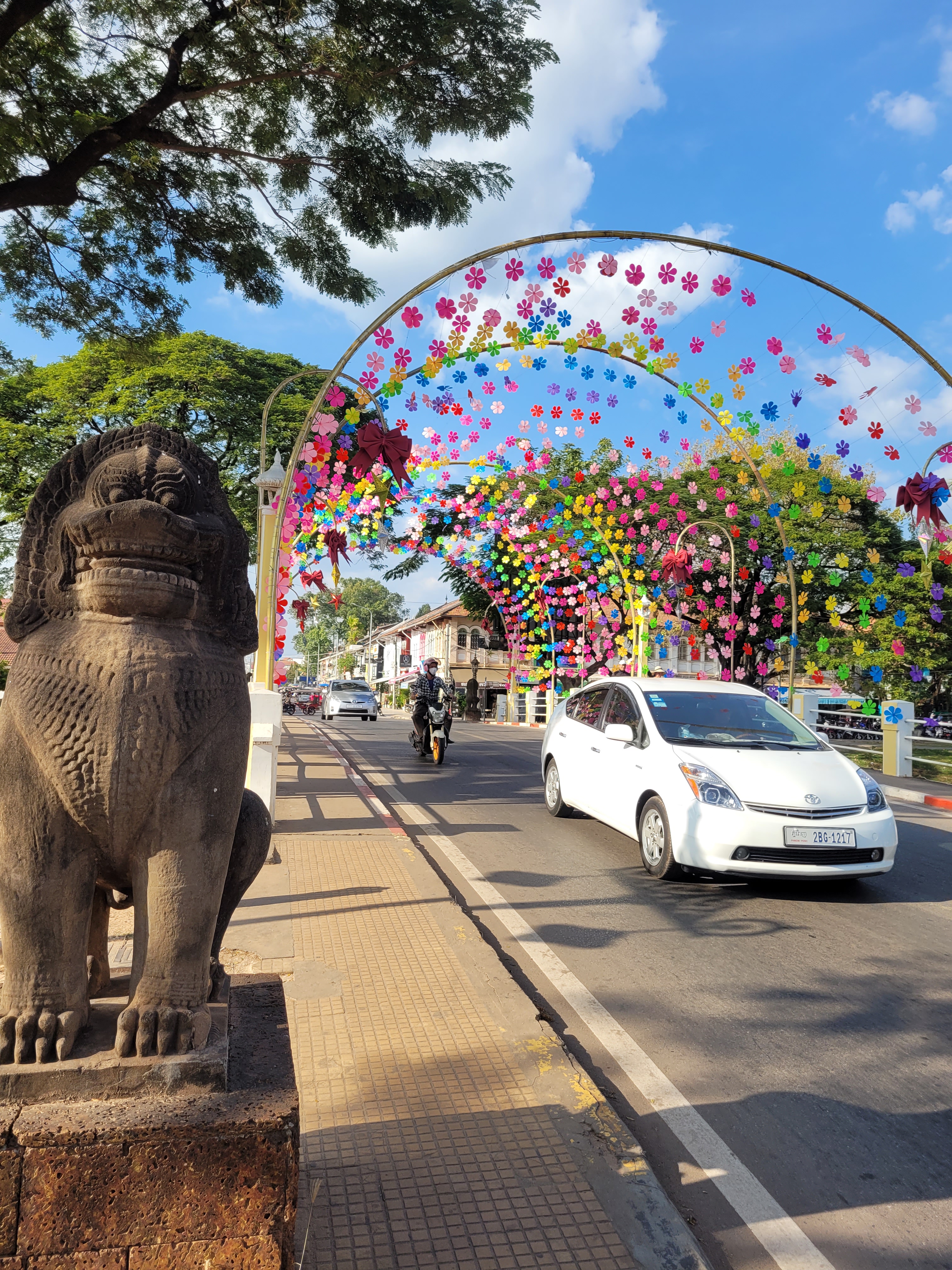
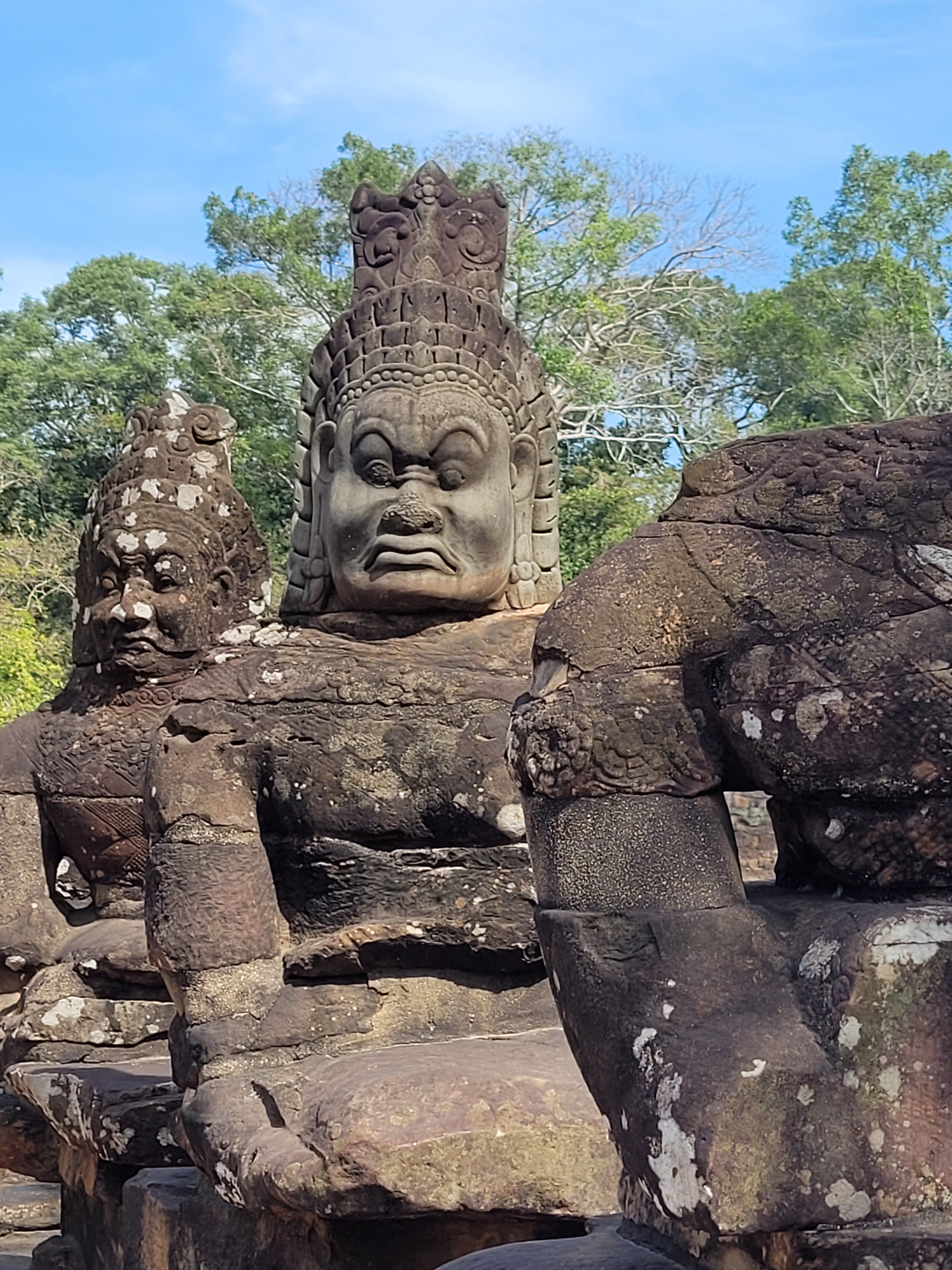
The next stop on the tour was Angkor Thom, which is famous for its series of colossal human faces carved in stone. The faces may be that of the king, or guards to protect the king, but it is a bit unclear. The street is lined with lions/warriors leading to the temples and they are really something to see up close.

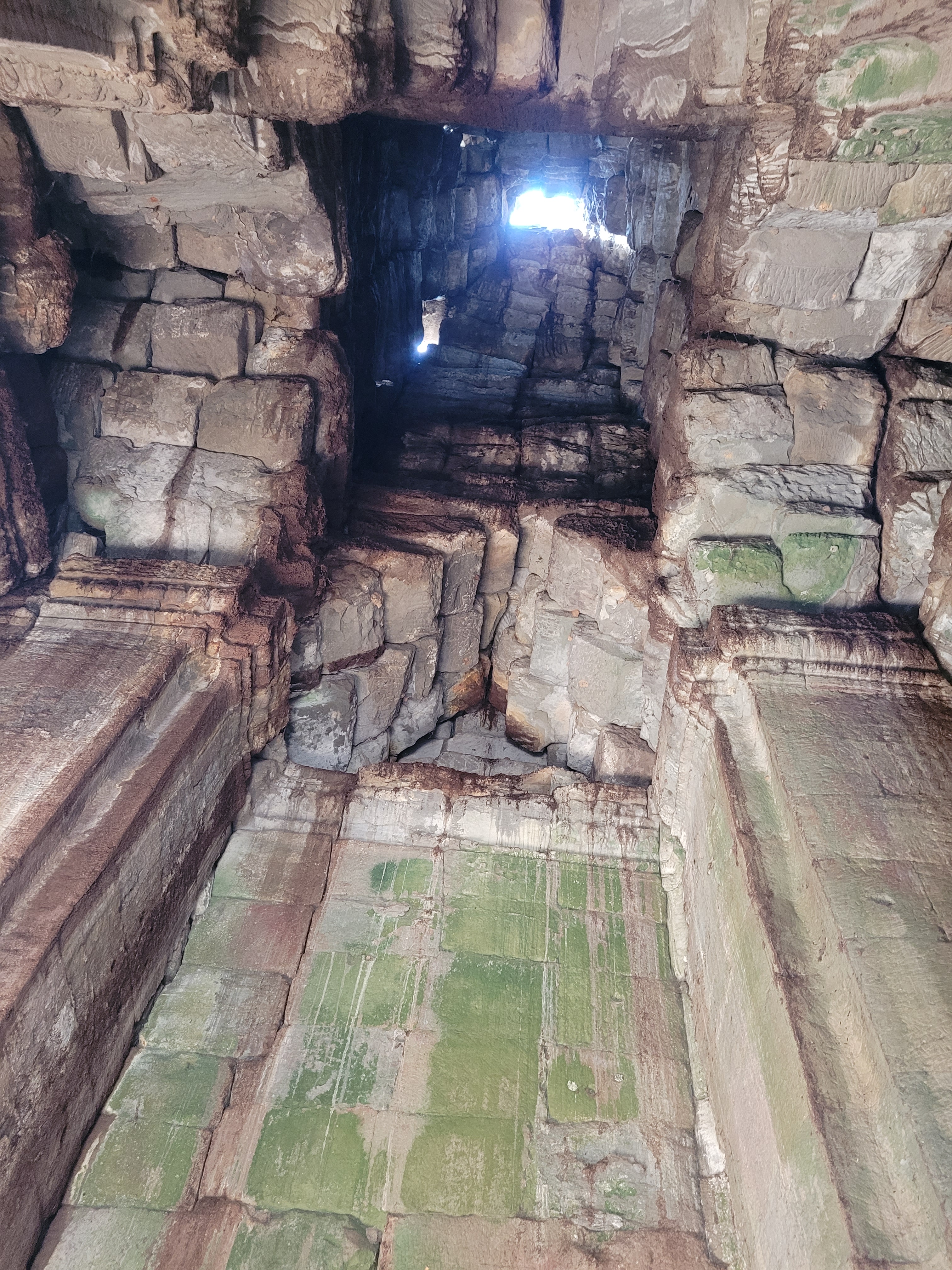
Little did I know that my guide saved the best for last. The jungle temple, or Beng Mealea is a hidden, lesser-known temple that has become part of the earth again. It was by far the best place I visited on this entire trip (minus the elephant sanctuary in Thailand which I’ll share later). This BBC travel article discusses the history of the temple.

For me, it was amazing to hear the birds and to walk among the ruins. My guide took lots of pictures of me and let me wander around on my own. I climbed to the top of one of the temples and tried not to die in the heat. By the end of the day I was a sweaty noodle and the happiest little scamp.

For those of you who are Tomb Raider fans, you will recognise this temple from the 2001 Angelina Jolie movie. My guide rolled his eyes when he told me that, which made me laugh for some reason. Clearly someone thought that fact should be included in the tour, and I am sure that there are people who enjoy that….I just wasn’t one of them.

I ended the day by the pool at the hotel and looked through the hundreds of photos that I took of the temples. It was everything that I hoped it would be, and cannot recommend it enough for anyone who loves history and wants to see a true wonder of the world.

The Scamp in Ho Chi Minh, Vietnam

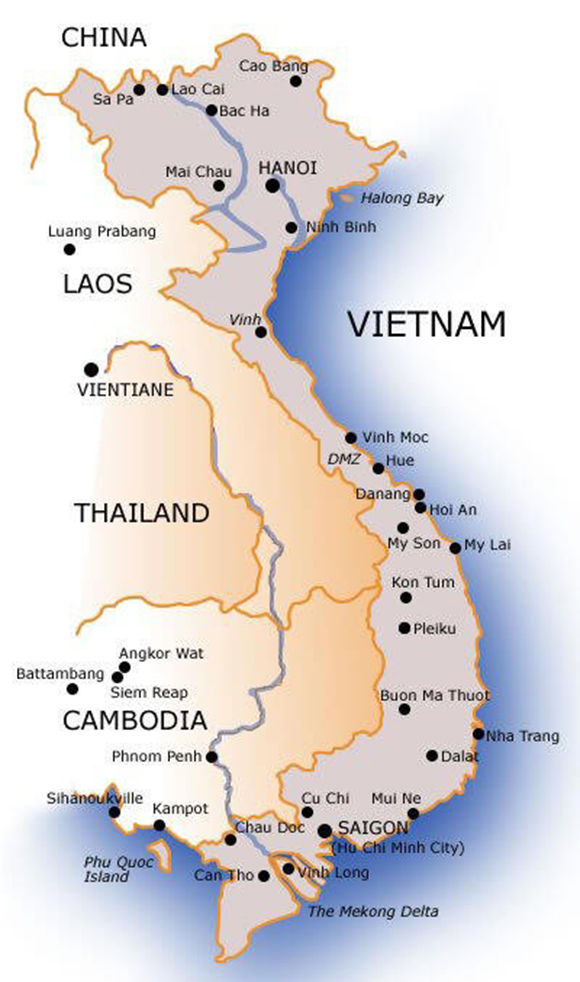
My time in Hanoi was brief. I took a flight to the other end of the country so that I could explore Ho Chi Minh city, one of the largest cities in Vietnam. It is commonly referred to as Saigon, the city’s name until 1945. The city is in the southeast part of Vietnam and is home to around 10 million people.

I was met at the airport by a guide who got me settled into the hotel. I stayed at the Prague Hotel, which had really nice clean rooms and good food in the hotel restaurant. It was also near a 7/11 and the best little sandwich station. I arrived on Christmas Eve, and got to take advantage of the warm weather and the bustling street. One of the great things about being in this part of the world is the smell of street food. Although I was not brave enough to try street food in Vietnam, the smells were amazing.

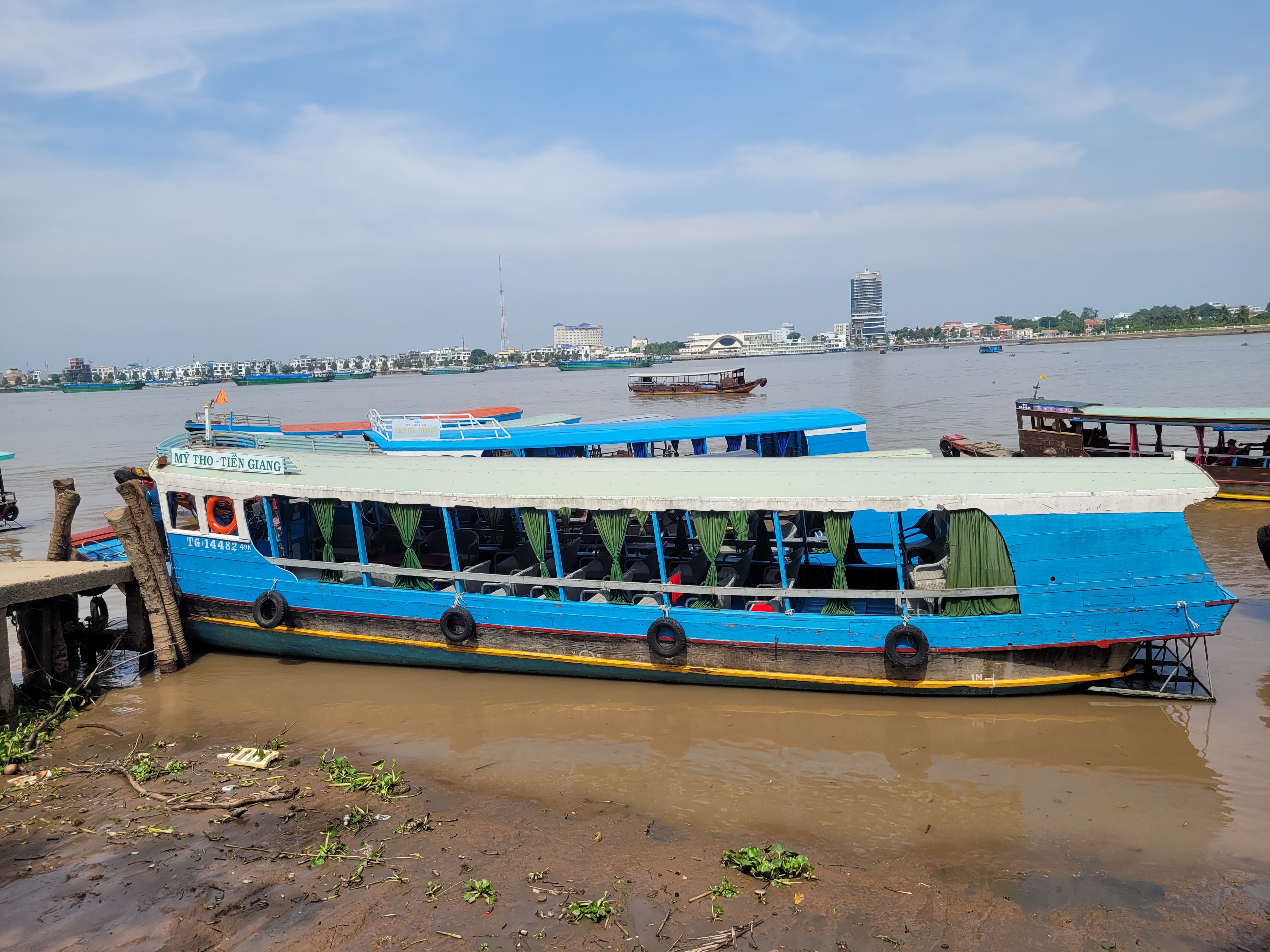
Christmas day was a journey to My Tho, which is an entrance to the Mekong Delta. I was on tour with three couples from India. The women were all friends from college. There was another couple from India as well as a guy who was travelling solo (also from India) and some people from the US. The whole group was fun and lively and the tour guide was such a nice guy. He was probably in his early 20s and he loved hearing travel stories from everyone.

The first place we stopped was the Vinh Trang Temple. The temple is known for the giant Buddha and the beautiful tiles and gardens. There is a great article that you can find here that provides an overview of the temple, but some of the highlights include:

  • Statue of Maitreya Buddha: This colossal statue was inaugurated in 2010, constructed from reinforced concrete and steel, standing at a height of 20 meters and weighing approximately 250 tons. Under this statue is an office building of the Buddhist Executive Committee of Tien Giang Province.
  • Statue of Amitabha Buddha: Inaugurated in 2008, this standing statue of Amitabha Buddha measures 18 meters in height and 150 tons in weight.
  • Reclining Buddha statue: Often mistaken for the statue of Amitabha Buddha, this Reclining Buddha statue was completed in 2013, with a length of 32 meters, a height of 10 meters, and a weight of 250 tons, made from concrete and steel.
  • 7-story tower: In addition to the colossal and majestic Buddha statues, Vinh Trang Pagoda also houses a 7-story tower located at the rear. This tower serves as a repository for the ashes of Buddhist disciples and monks of the pagoda.

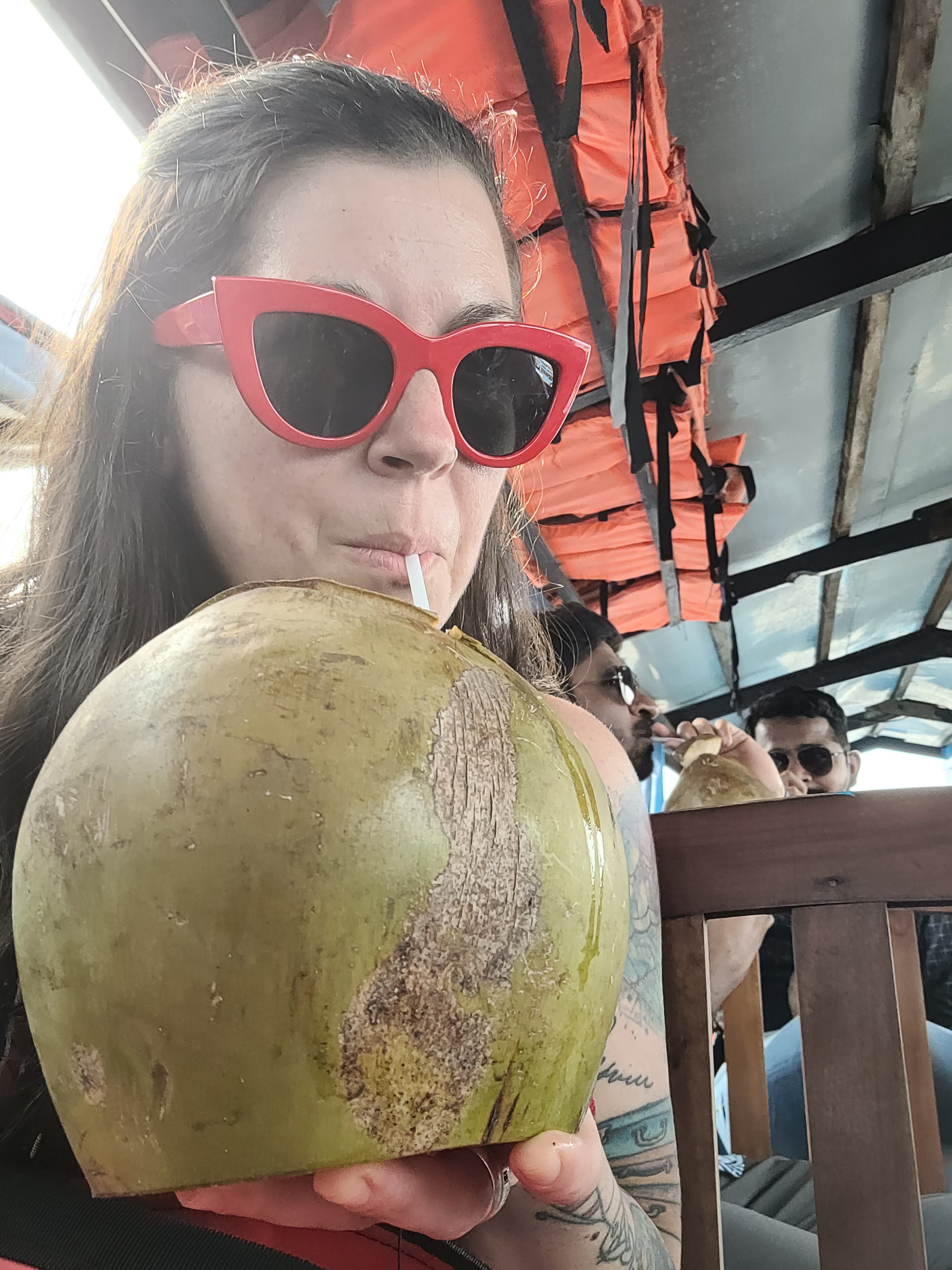
We then boarded a boat and sailed down the Mekong around four islands, Dragon, Unicorn, Pheonix and Tortiose. We stopped on Unicorn island and then took a sampan through the Thoi Son canal to see a honey bee farm and have a very interesting lunch.

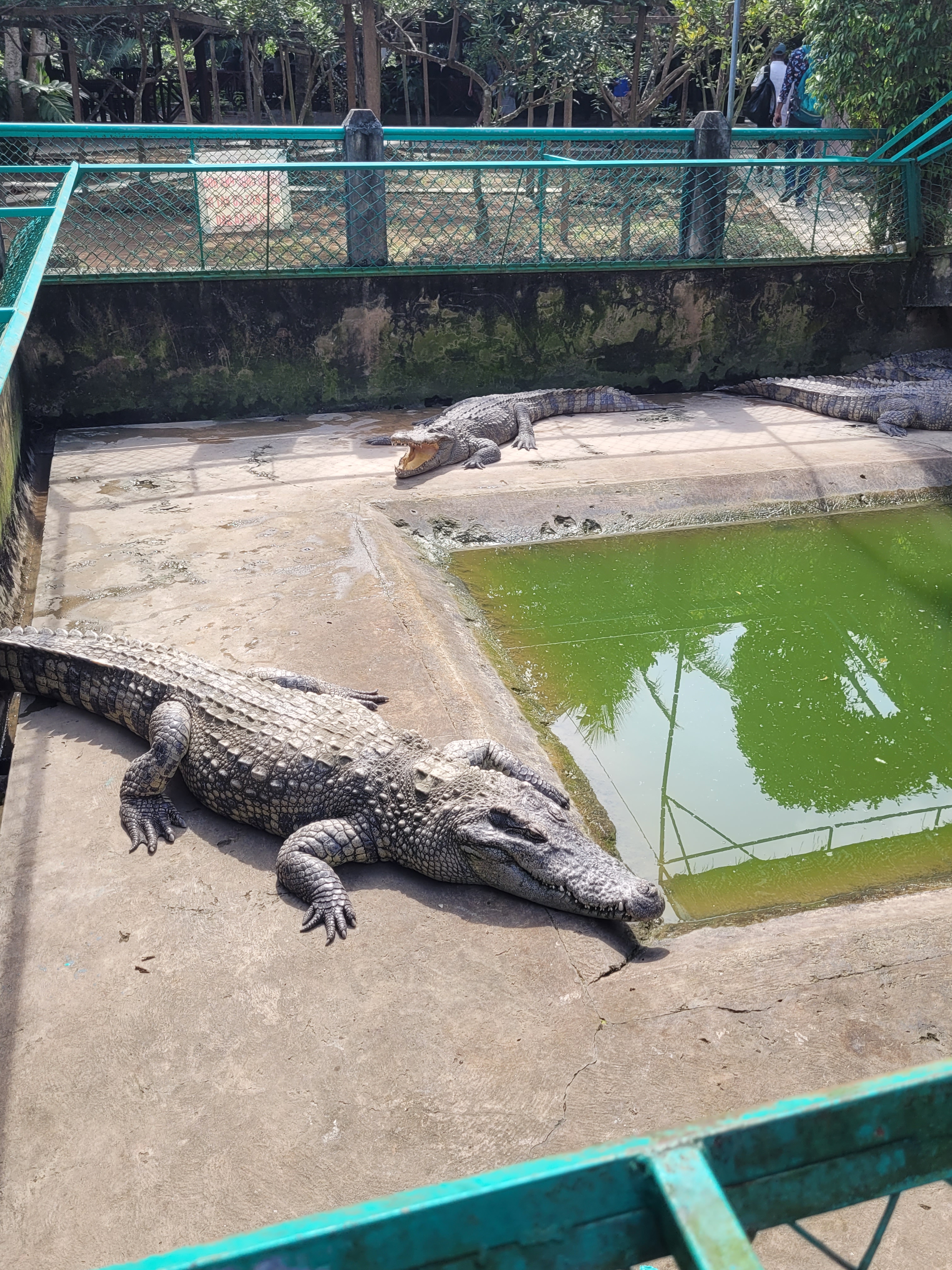
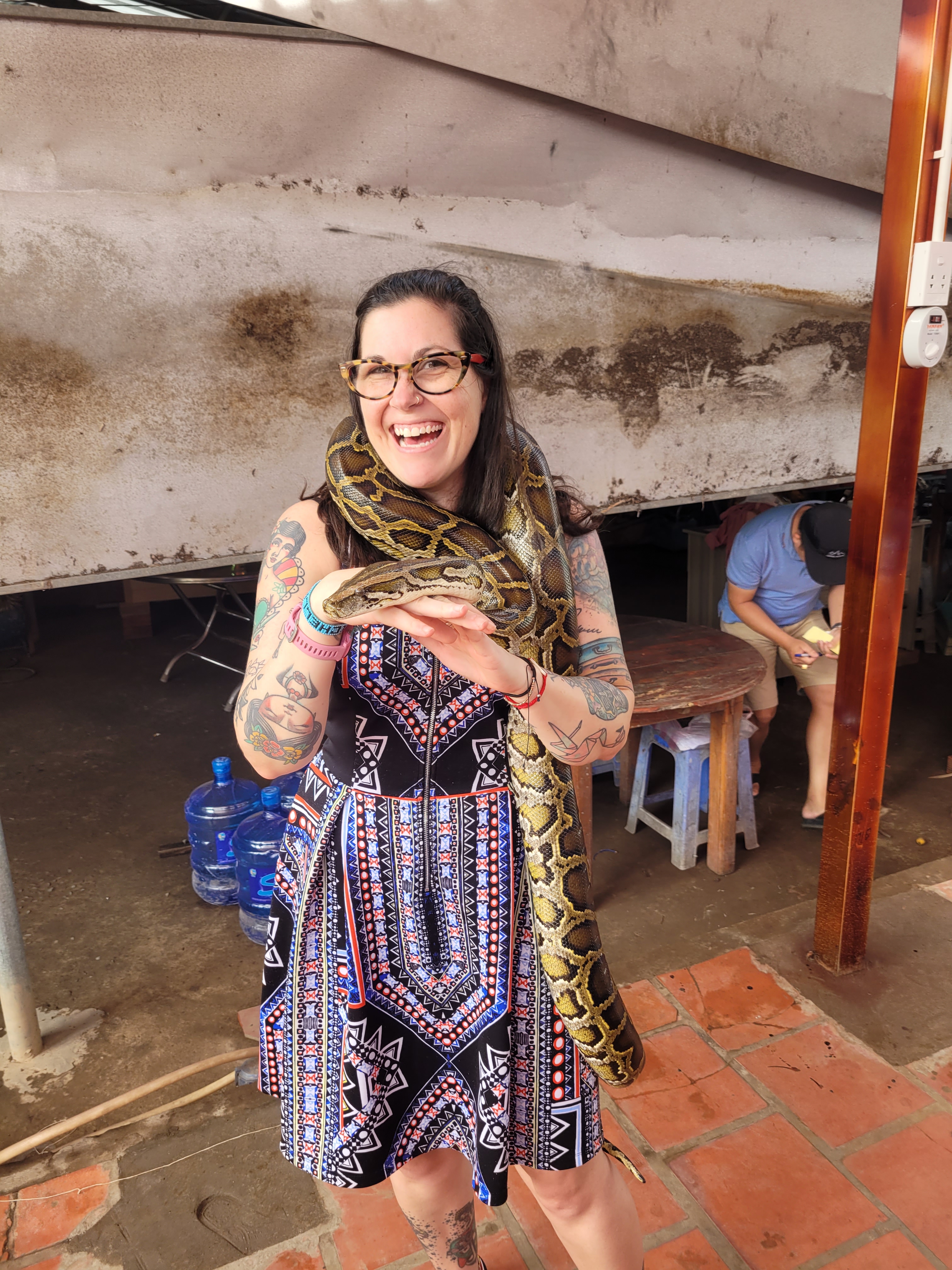
The island had a host of animals that were for sale and some interesting drinks that promised a wide range of cures. I was not brave enough for snake wine, but I did hold some bees and a snake.

Once back at the hotel, I had a Christmas Banh Mi, which is a sandwich that was filled with veggies and chicken and some sort of spicy chilli sauce that was amazing. This was not the first Christmas that I have spent away from my family, but it was the first warm one that I’ve had in a while.

I really enjoyed my time in Vietnam, but it was not long enough. 5 days was not enough to see everything, and it is definitely a country that I would visit again. The people were really nice, it was fairly easy to navigate, and the food was amazing. I felt very safe there being a solo female traveller, and found that there were a lot of good tours that could be easily booked to get me around. It really is a must visit.

The Scamp in Hanoi, Vietnam

I’m taking it back to December 2022. I have a massive backlog of travels to write about, but life has been very stressful lately, and writing about all of this so long after the fact feels odd. I miss the days when I updated this blog as things happened.

In November of 2022, my stepbrother Sean died. His death came almost 7 years to the day of my brother Eric, forever making Thanksgiving a horrible holiday for my dad. Addiction is a serious problem and sometimes it completely consumes a person. I’d booked this trip months before Sean’s death and had a serious chat with my parents about cancelling the trip or not. My dad told me to go on the trip and use the time to relax and process.

The trip did not get off to the best start. My flight from Edinburgh to London was cancelled, which caused me to miss my flight from London to Qatar. I ended up having to fly out the next day, which cost me the first two days of my time in Vietnam. The changing of the ticket and a new flight will become an issue later, but at that time, I was happy to have a flight out.

I booked my travel with a company called Realistic Asia. I cannot recommend them enough. The company books tours through Southeast Asia. They take care of everything, internal flights, private tour guides, hotels, every aspect of the trip you can think of. They were so helpful when I had to change my flight and even booked me a new hotel. Due to a slight misunderstanding on my part, what I thought was a group tour was actually a group of 1 tour. This turned out to be amazing once I was in Cambodia, Thailand and Laos.

I arrived in Hanoi after a million hours in Qatar’s airport to warm weather and the friendliest hotel staff. After a bit of a nap, I went out to enjoy the city a bit. I was only going to have one day in the city before going to Ho Chi Minh, so I wanted to make the most of it.

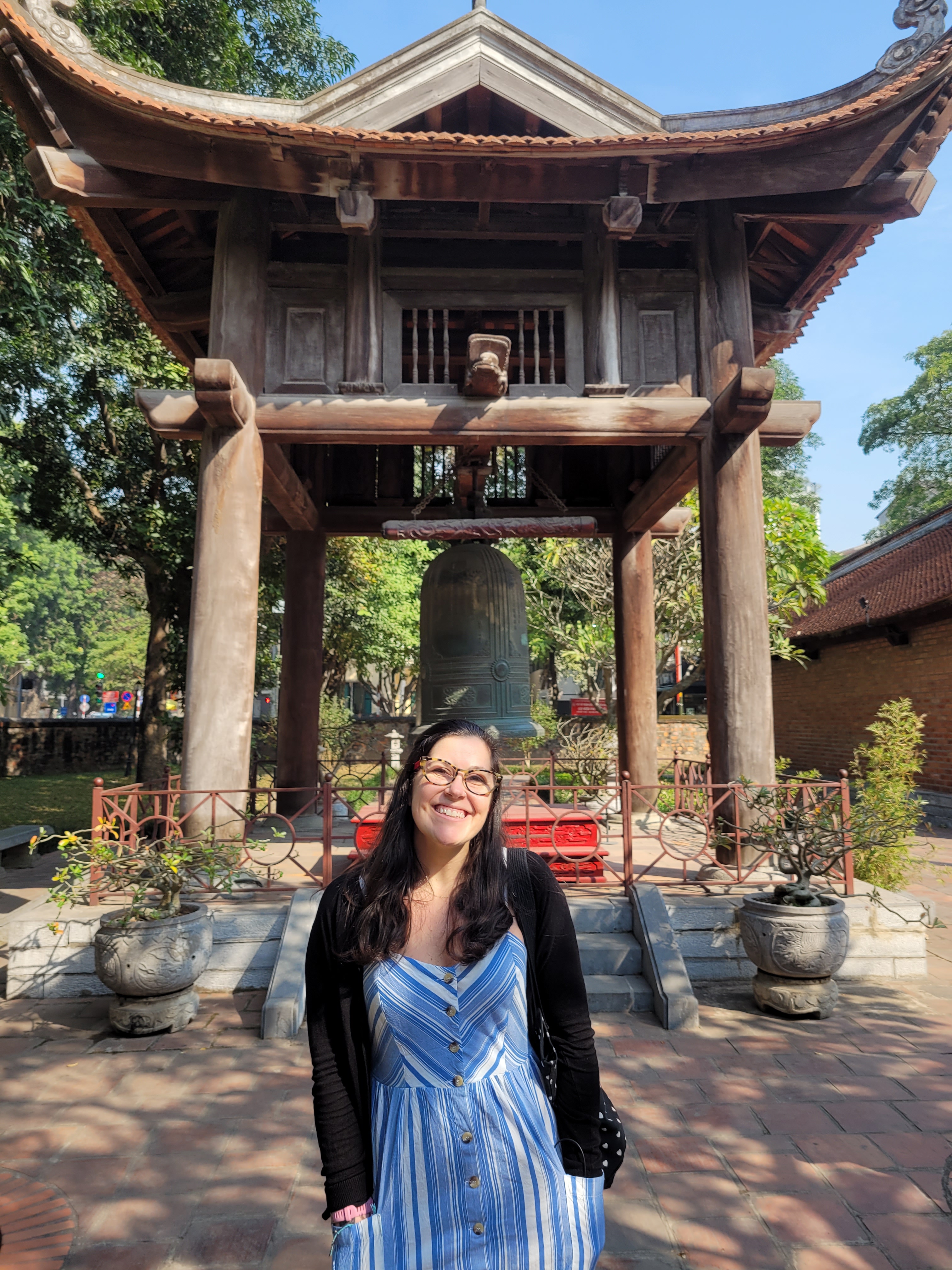
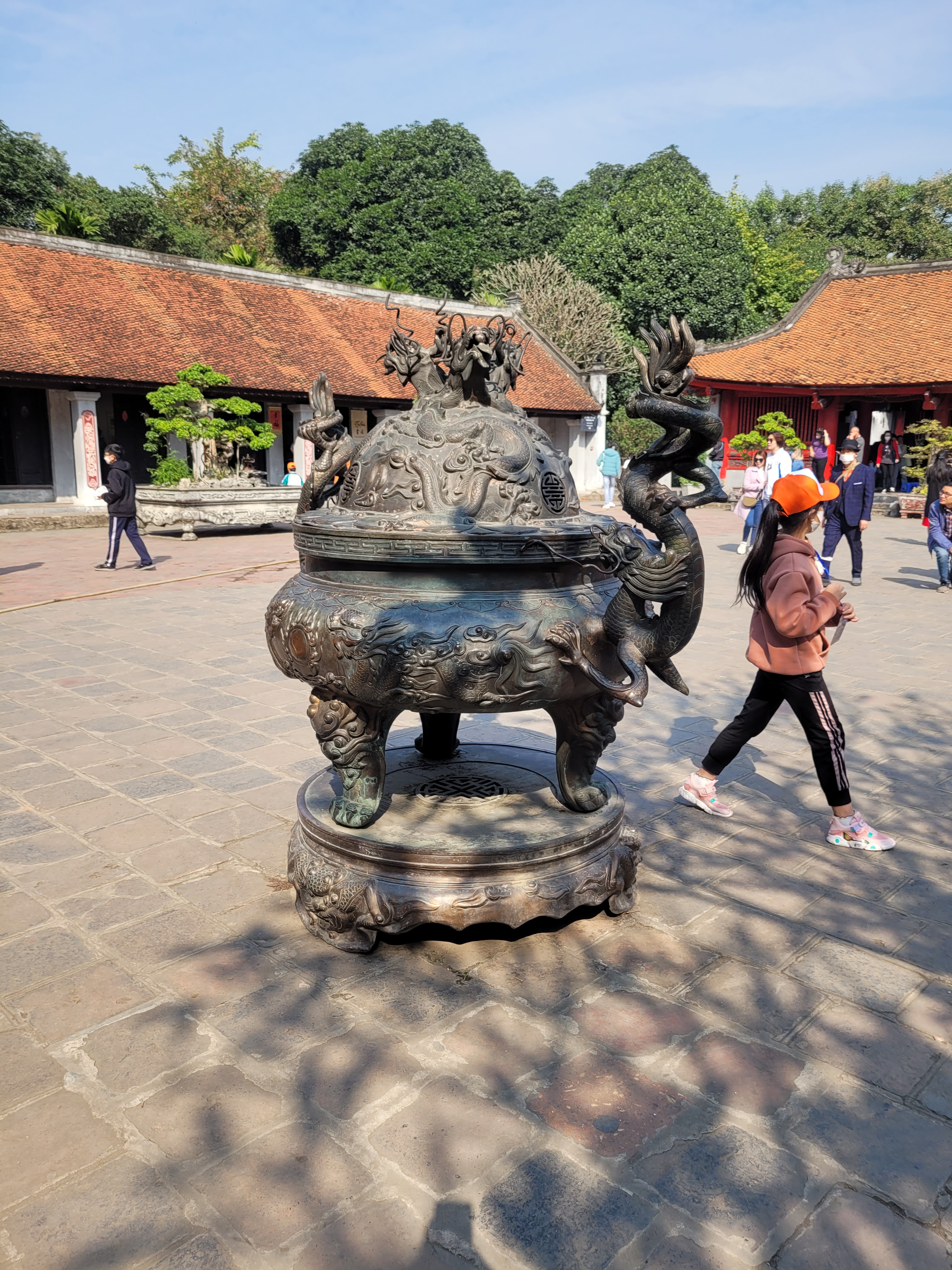
After a quick Google search I found the Temple of Literature. It is a temple dedicated to Confucius and was built in 1070. Yes, 1070! The temple was a popular spot for school tours, and it was really fun to see all the kids going through the temple.

According to Wikipedia:

The Văn Miếu is one of several temples in Vietnam which is dedicated to Confucius, sages, and scholars. The temple is located to the south of the Imperial Citadel of Thăng Long. The various pavilions, halls, statues, and stelae of doctors are places where offering ceremonies, study sessions, and the strict exams of the Đại Việt took place. The temple is featured on the back of the 100,000 Vietnamese đồng banknote. Just before the Tết Vietnamese New Year celebration, calligraphists will assemble outside the temple and write wishes in Chữ Hán.

The temple has 5 courtyards and a selection of stone tablets to encourage people to study.

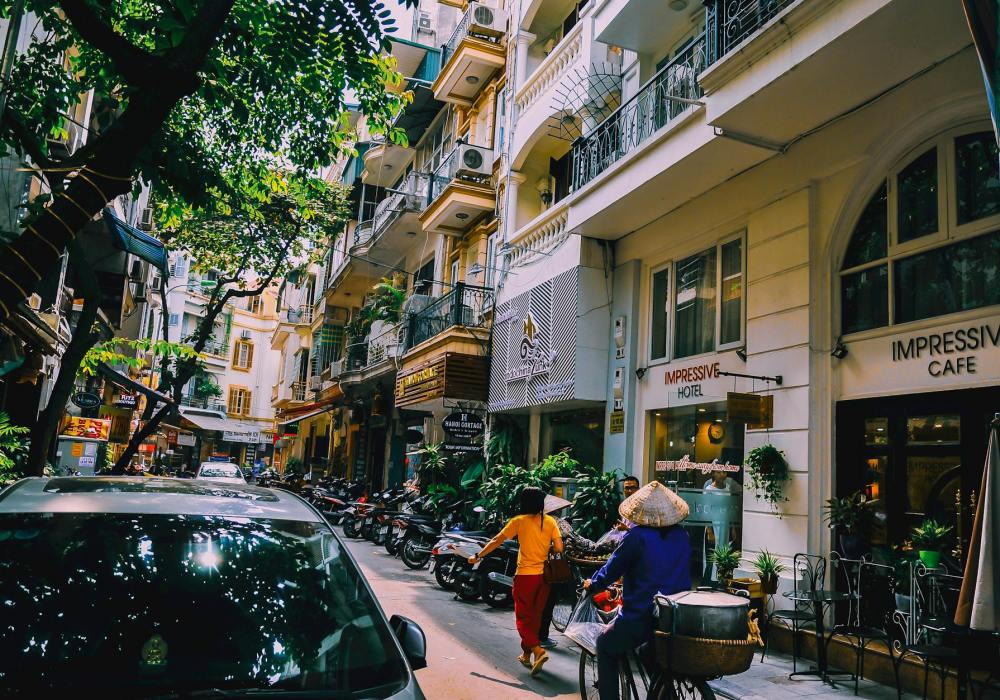
Once I had explored the temple, I decided to brave the streets and wander the city a bit. Let me tell you, that was an experience. Scooters do not stop and the constant honking and beeping let you know that you might get run over if you dare to cross the street. I made it across thanks to a tiny little grandma who just walked like she was invisible. People stopped for her and I just road her coattails across the street. I enjoyed the walk and only had to pop into a hotel once to get wifi so I could get back to my hotel. The day was a major success.

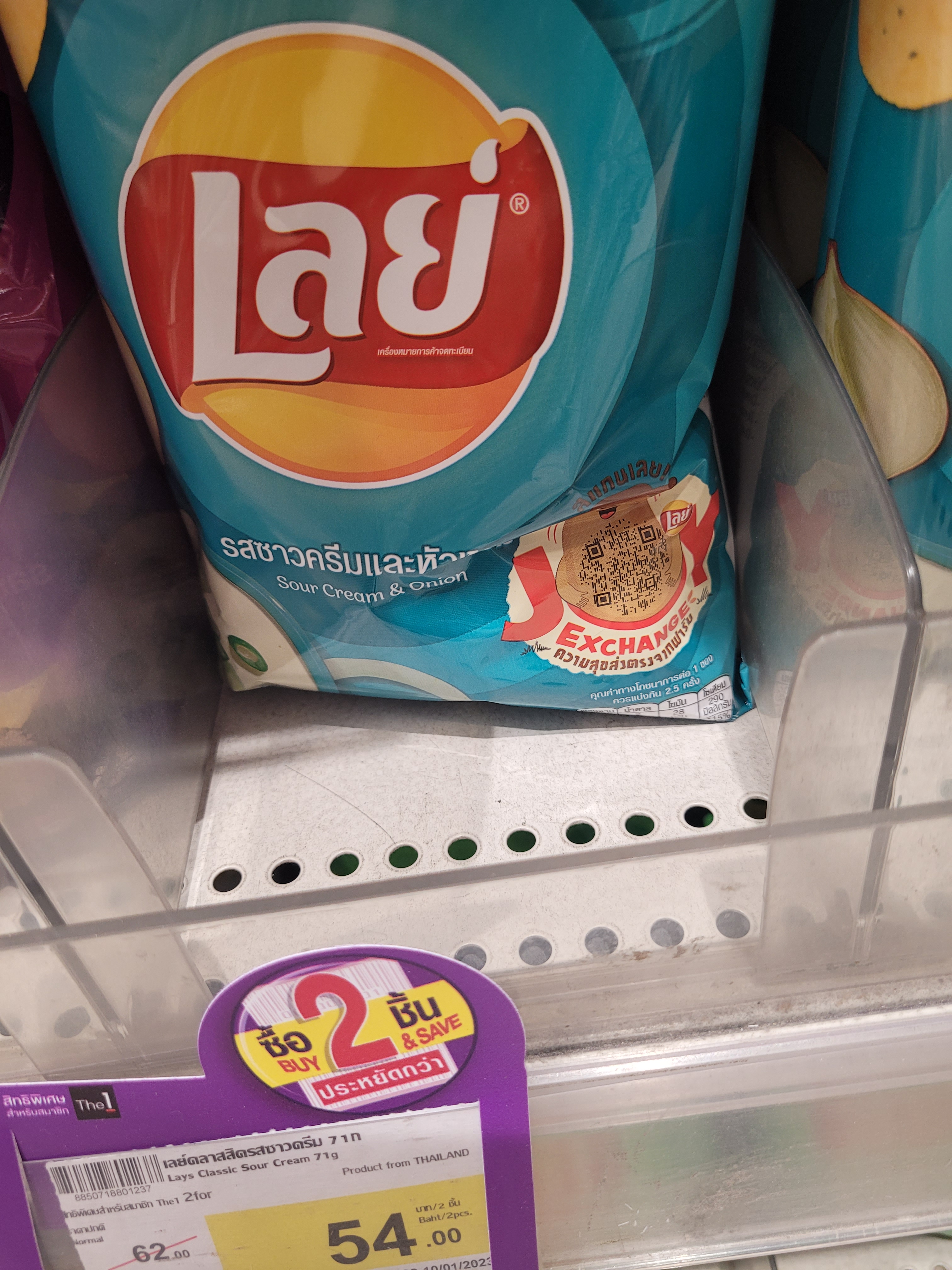
This also started my goal of going into as many 7/11s as I could find. The flavours of crisps on this trip were amazing, so different from what you can find in the US and the UK. The seaweed-flavoured ones were surprisingly good.

Unfortunately, I missed the chance to take a cruise along the Ha Long Bay, and I would definitely go back to visit.

The Scamp in Israel Day 8

It seems strange to be writing about Israel when so many people in the world right now are calling for the destruction of the country. This week was Israel’s independence day, and all the articles that I saw in the UK were centred on the 76 years of Palistine’s occupation. It is hard living in a country that doesn’t respect Jewish people, and to see so many of the people around me spouting antisemitic rhetoric while protesting a ‘genocide’ as if they don’t understand what a war is. While I have a very complicated belief about the current war, I understand the history of the area and who has claimed the land at different stages of time.

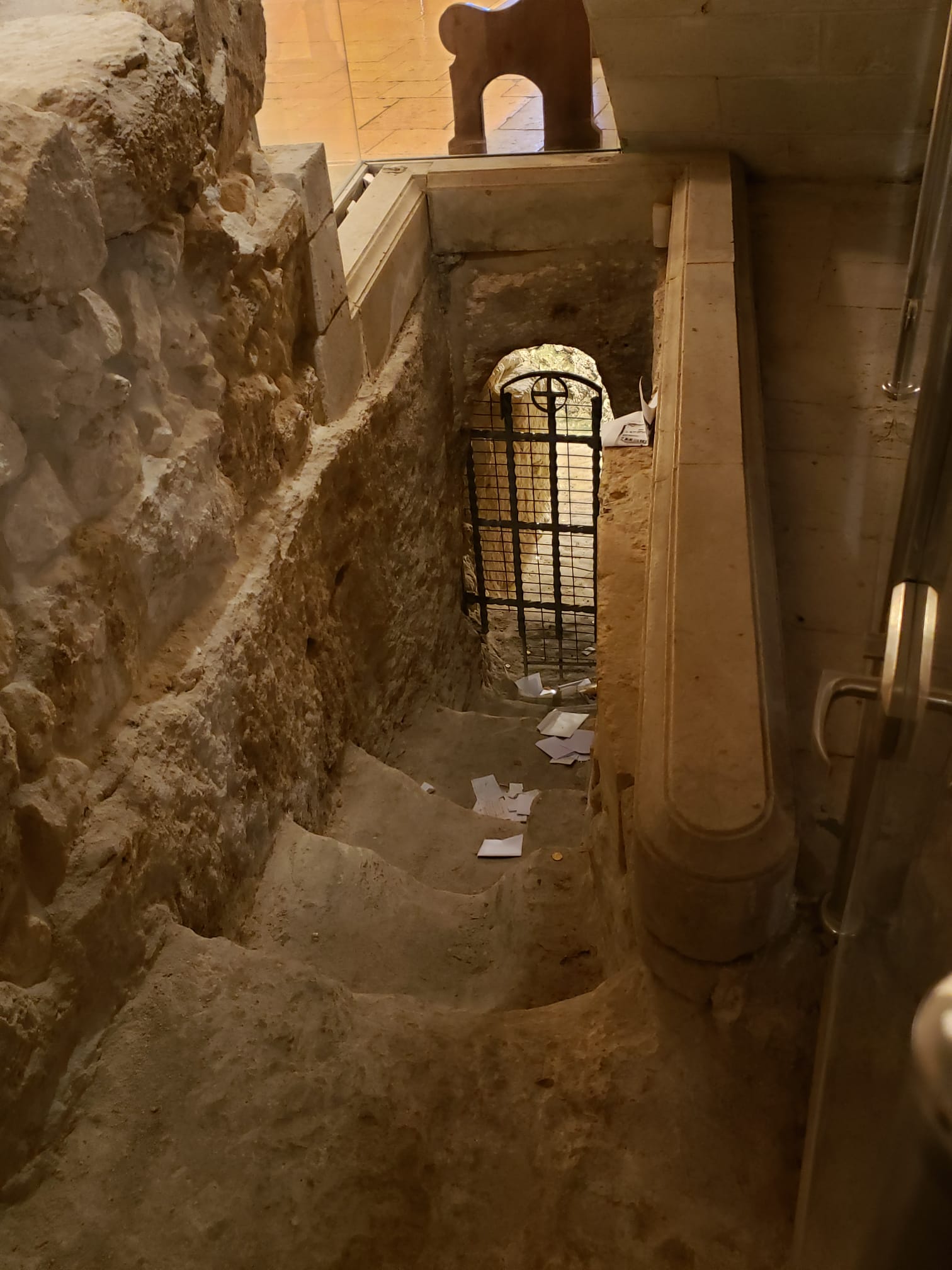
But, that is not fun to think about, whereas my time in Israel and Palestine was fun. Day 8 found us in Bethlehem where we got to visit the Church of the Nativity. This is one of the oldest continuously run churches in the world. It is currently run by three different religious groups, Greek Orthodox, Catholics and Armenian Apostolic. You can see the influences of the different religions in the architecture and the way that the church is decorated. It is within this church that the spot where Jesus was born is marked with a 14-pointed silver star.

We then wandered through the city and did the stations of the cross, stopping at each site in the busy city streets. We ended at the Church of the Holy Sepulchre (which is called the Church of the Resurrection).

This was the last part of the tour, so my parents and I went back into the city for a final dinner together. I ended up having a very rushed goodbye with them at the airport and didn’t get to see them again for almost 10 months. It was worth spending time with them though and learning a lot more about the region. Israel is a place I would visit again, and Tel Aviv is a city that I could see myself living in. It makes me sad to think that some of these places have been destroyed because of the war or that some of the people that we met could be dead, or could have family who have died. I wonder what happened to our tour guide Rafe. He has such a love for Israel and had such a love for the fact that we were Jewish and he could show us our culture in a real and in-depth way.

It is one of the best vacations I have ever taken, and I hope to return to Israel one day.

The Scamp in Israel Day 7

I took another long break from writing. Shortly after my last post on October 7th, Hamas led an attack on Israeli soil, the first since the first since the Arab-Israeli War in 1948. 1,200 Jewish people were killed, and a resurgence of Israel-Hamas war has now divided the world.

I find myself in a place today where a little bit of writing about something fun might pull me out of the sadness of the last few months.

Day 7 saw us taking a cable car ride up Mount Masada, the fortress of Herod the Great. According to UNESCO World Heritage:

It is a symbol of the ancient kingdom of Israel, its violent destruction and the last stand of Jewish patriots in the face of the Roman army, in 73 A.D. It was built as a palace complex, in the classic style of the early Roman Empire, by Herod the Great, King of Judaea, (reigned 37 – 4 B.C.). The camps, fortifications and attack ramp that encircle the monument constitute the most complete Roman siege works surviving to the present day.

https://whc.unesco.org/en/list/1040/#:~:text=It%20is%20a%20symbol%20of,reigned%2037%20%E2%80%93%204%20B.C.).

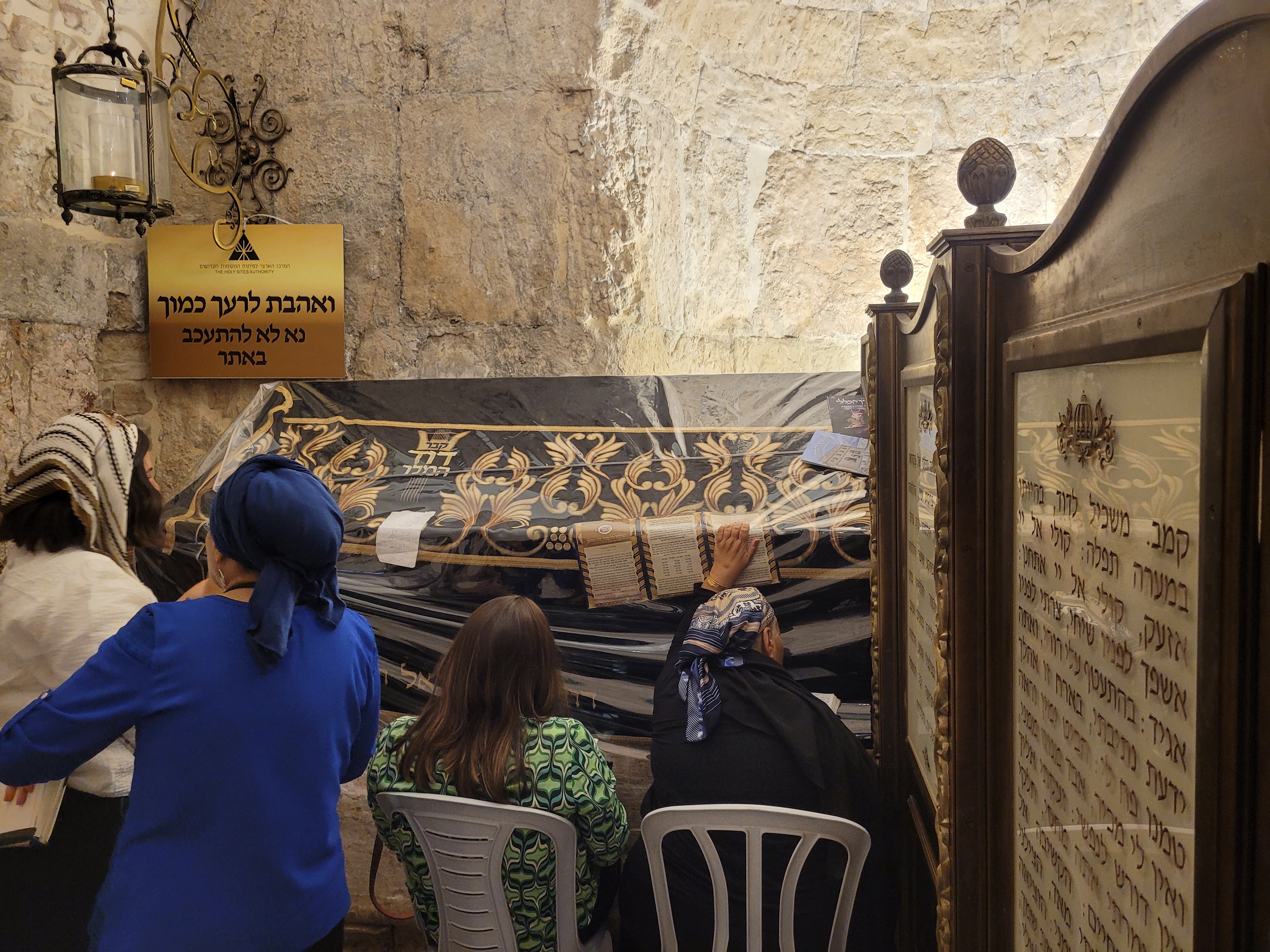
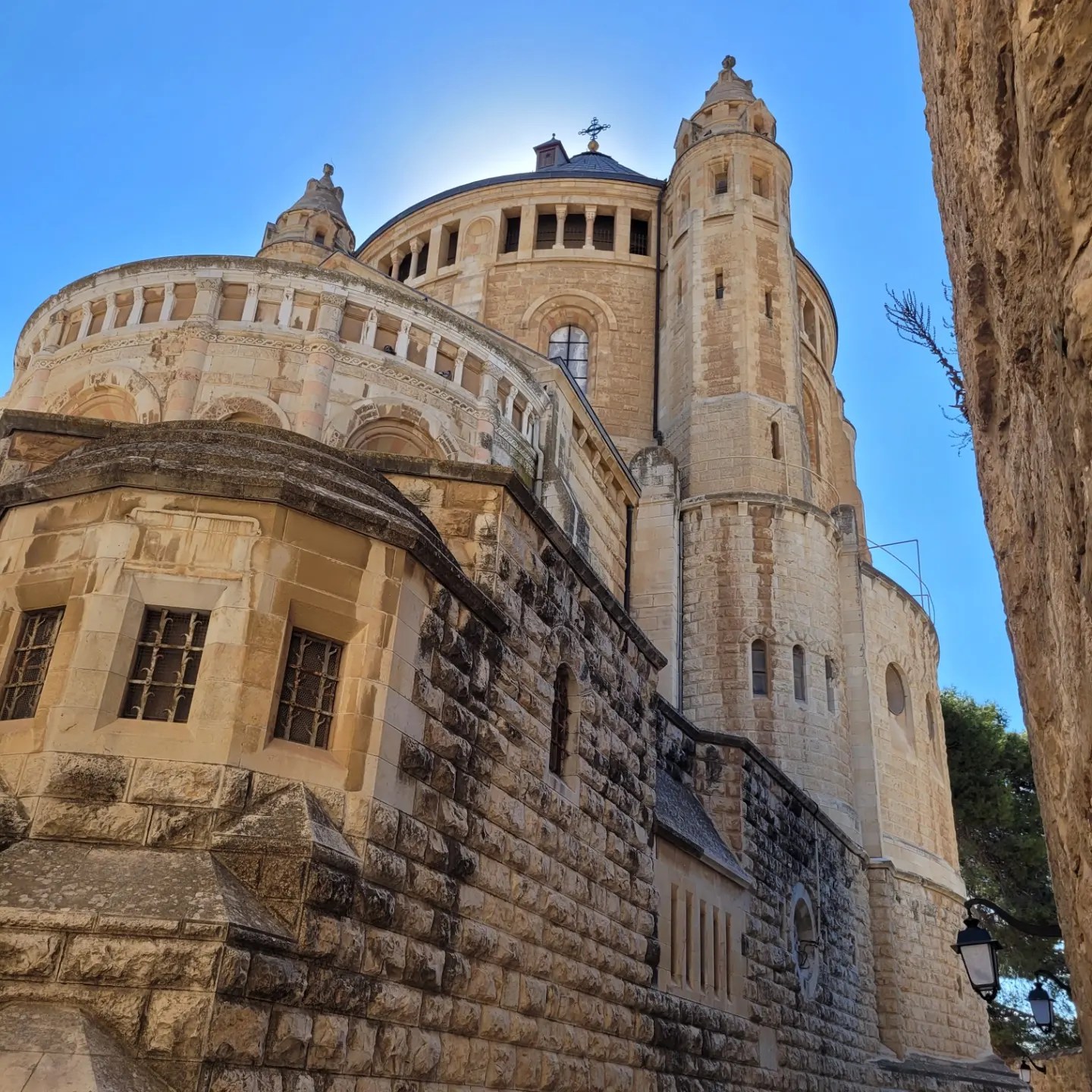
After Mount Masada, we took a drive through the Judean Hills to Mount Scopus to get the best views of Jerusalem. We then went to Mount of Olives where the western part of the slope has been used as a Jewish cemetery for 3,000 years. It is also the place where Jesus is said to have ascended to Heaven. The tour ventured to Mount Zion and King David’s tomb, the site associated with King David’s burial. The tomb is on the ground floor of a church that is said to hold the room of the Last Supper.

We ended the night at the Western Wall. The Western Wall (called the Wailing Wall by most people in the West), is an ancient limestone wall in the old city of Jerusalem in the spot known as Temple Mount. It is the holiest spot for Jewish people to pray as it is believed to be the last part of our Holy Temple. There is a tradition at the wall where people leave notes in the cracks of the wall for health and wellbeing. My mom and I left a note of health for a friend of ours who has cancer and generally took in the magnitude of such a place. I don’t cry much (okay, that’s a lie, I cry all the time), but it was such an overwhelming feeling seeing women praying and practising sorrow meditation.

One of the things that bothered me on this tour was that my mom and I were the only Jews doing the tour so we had to deal with the ignorance of a lot of the people on the tour. While Jewish women were praying at the wall, many of the women in our tour group were taking selfies or photos of their hands touching the wall. I have limited patience for the ignorance of others, and these people seemed completely oblivious to the seriousness of where we were. I’d been dealing with this for the entire trip, and I’m not sure I was great at hiding my facial expressions most of the time. Even our tour guide had a hard time with a lot of these people. He’d sit with me at the group dinners or walk with me when we were going to different sites and talk to me about the people and fun places to visit in the city when we had some free time.

This was the start of the wind-down of the trip and I was not ready to have to say goodbye to my parents. I never look forward to that part of my trip.

The Scamp in Israel: Day 6

I’ve taken a long break from writing, and I’d like to say that it was because I was doing something fun, but it hasn’t been. I’m back in California for an extended period of time, and, while I’m not fully ready to discuss it, I thought getting back into writing about things that make me happy may help me start to feel better.

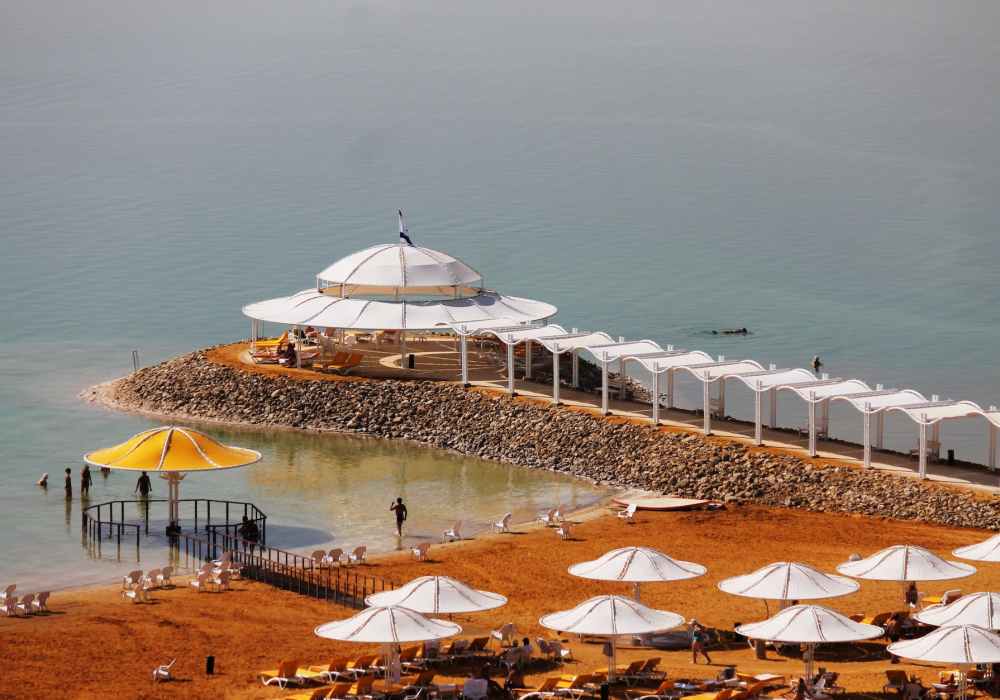
Day 6 in Israel took us to the Dead Sea. It was hot….like 40 degrees hot. We were there in the late afternoon, and it still did nothing to cool the water.

You really do float in the Dead Sea, and it really does wonders for your skin. I did not go out too far because I was barefoot and the sea floor is not fun on your bare feet. But I did enjoy the benefits of the salt water for the next few weeks.

Before we arrived at the sea, we spent the day on the Sea of Galilee taking a boat ride and enjoying the Ginosar Kibbutz. According to jesusboat.com:

The Kibbutz was founded in 1937 by idealist Zionist youth, and was named after the ancient city. Its most famous resident, Yigal Alon (1918-1980), was one of the Israeli Army’s most notable commanders and a prominent minister in Israel’s governments. Despite being surrounded by hostile population in its initial years of existence, Kibbutz Ginosar quickly gained a reputation for the warm hospitality that it provides for travelers. Among the many people hosted by the Kibbutz was Hannah Szenes, who later became a symbol of heroism for Israeli youth when she joined a daring mission behind the enemy lines during World War II, from which she did not return. Szenes stayed at the Kibbutz during a trip at the area in 1940, and described in her diary how impressed she was with the resident’s struggle.

In 1986, two brothers from the Kibbutz have discovered the remains of the ancient boat on the northwest shore of the Sea of the Galilee. 27 feet long and 7.5 feet wide, the boat was constructed of ten different kinds of wood, and was meant to allow fishing close to the shore. The extraction and preservation process of the boat was long and complex, and now it can be seen at the Kibbutz’s museum.

It was the dating of the boat using radiocarbon dating which brought the real exciting news: the boat dates back to the time of Jesus Christ. Indeed, it fits the many description of boats from the Holy Scriptures, as the one mentioned in the Gospel of Luke. A sign that the boat relates to sacred times was given at the time of its discovery: the two brothers who discovered the boat reported seeing a double rainbow in the sky on the same day.

https://www.jesusboat.com/ginosar-home-of-jesus-boat/

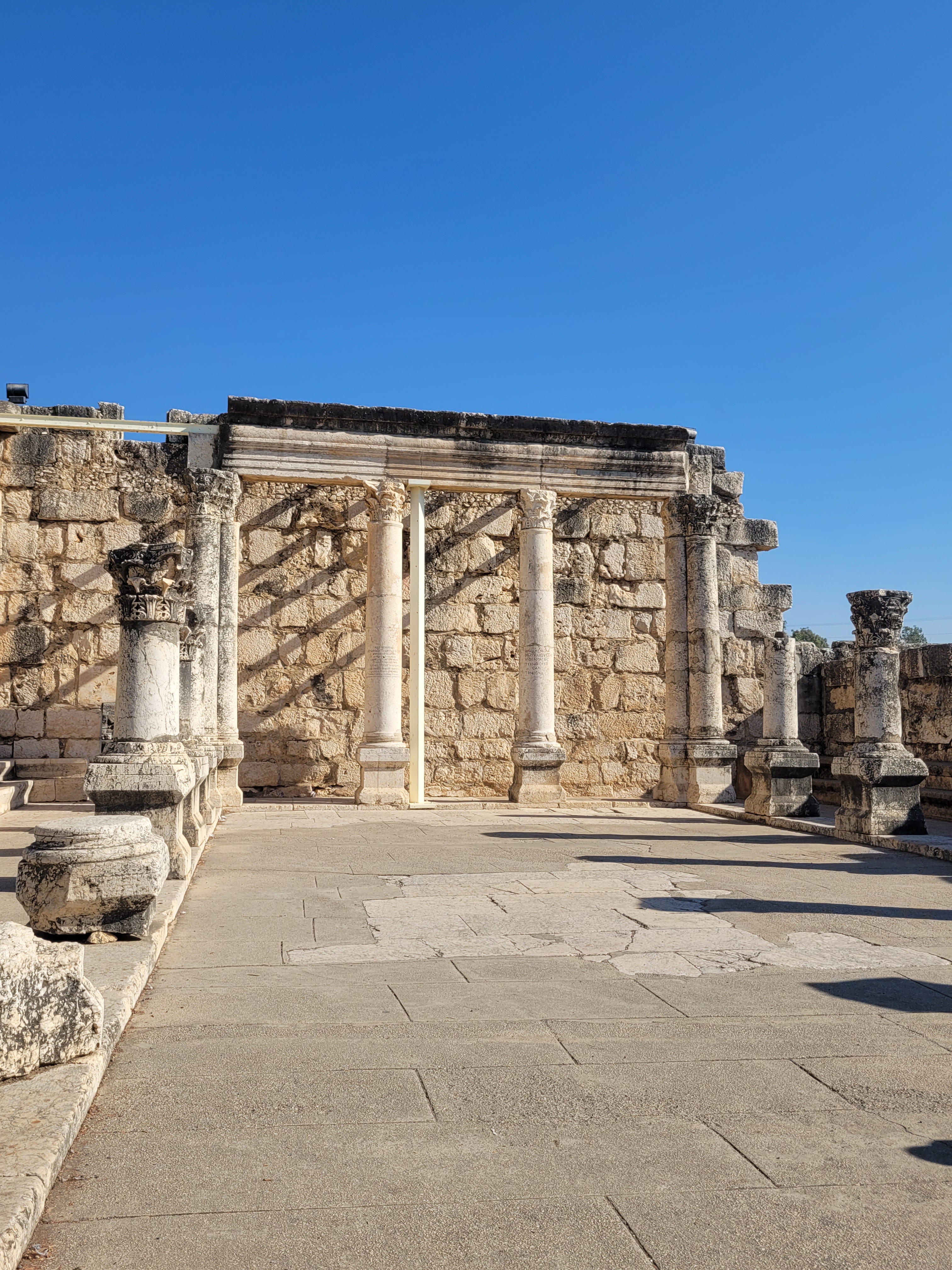
We then went on to visit Capernaum, where Jesus is said to have entered the synagogue to teach, before heading to the Mount of Beatitudes, where he preached the Sermon on the Mount. We finally got to see a temple, and not just any synagogue, but the Synagogue of Capernaum, which was built in the 4th century and is also known as the ‘The White Synagogue” as it was built from white stones from nearby Galilee and was a beacon amongst the typical grey buildings of the area. It is known as one of the oldest synagogues in the world, and according to Wikipedia:

The building consists of four parts: the praying hall, the western patio, a southern balustrade and a small room at the northwest of the building. The praying hall measured 24.4 by 18.65 m (80.1 by 61.2 ft), with the southern face looking toward Jerusalem. The internal walls were covered with painted plaster and fine stucco work found during the excavations. Watzinger, like Orfali, believed that there had been an upper floor reserved for women, with access by means of an external staircase located in the small room, but this opinion was not substantiated by the later excavations of the site.

https://en.wikipedia.org/wiki/Capernaum

Next to the synagogue is the House of Peter.

One block of homes, called by the Franciscan excavators the sacra insula or “holy insula” (“insula” refers to a block of homes around a courtyard) was found to have a complex history. Located between the synagogue and the lake shore, it was found near the front of a labyrinth of houses from many different periods. Three principal layers have been identified:

  1. A group of private houses built around the 1st century BC which remained in use until the early 4th century.
  2. The great transformation of one of the homes in the 4th century.
  3. The octagonal church built in the middle of the 5th century.

The excavators concluded that one house in the village was venerated as the house of Peter the fisherman as early as the mid-1st century, with two churches having been constructed over it

https://en.wikipedia.org/wiki/Capernaum

I’m not sure how I feel about modern churches being built over ancient sites, but I guess that is always going to be a thing. It was another day of listening to Rafi and really enjoying his stories and the way that he presented the history. As I mentioned in the last post, I really wish that I had journaled as we went so I could have captured all of the things that we learned, but I was just so happy to be in Israel and be with my parents that I did not think about being a good little travel writer.

The Scamp in Israel Day 5

Israel is not just deserts and old cities. It has a large agricultural region in the north that has an abundance of fresh water and serves as a major stopover for birds during migration. The Hula Valley has a marshland and reserve where the birds are protected and have a safe place to stop during their long journey between Africa, Europe and Asia.

When we toured the valley it was really hot, and honestly, I wasn’t that interested. We weren’t there during migration, so there weren’t a lot of birds and the bus life and listening to the cultural ignorance of some of the other members were really working on my nerves.

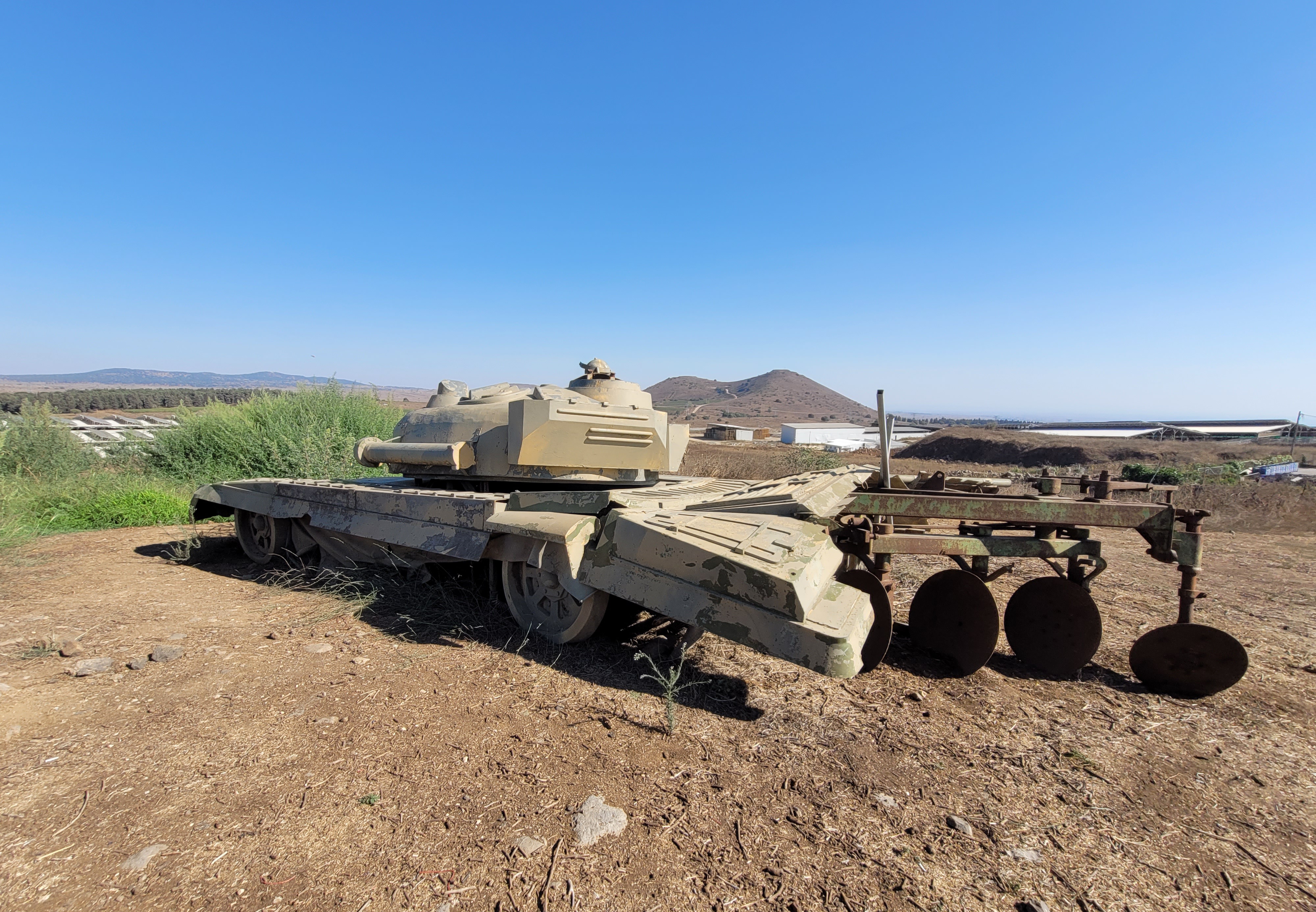
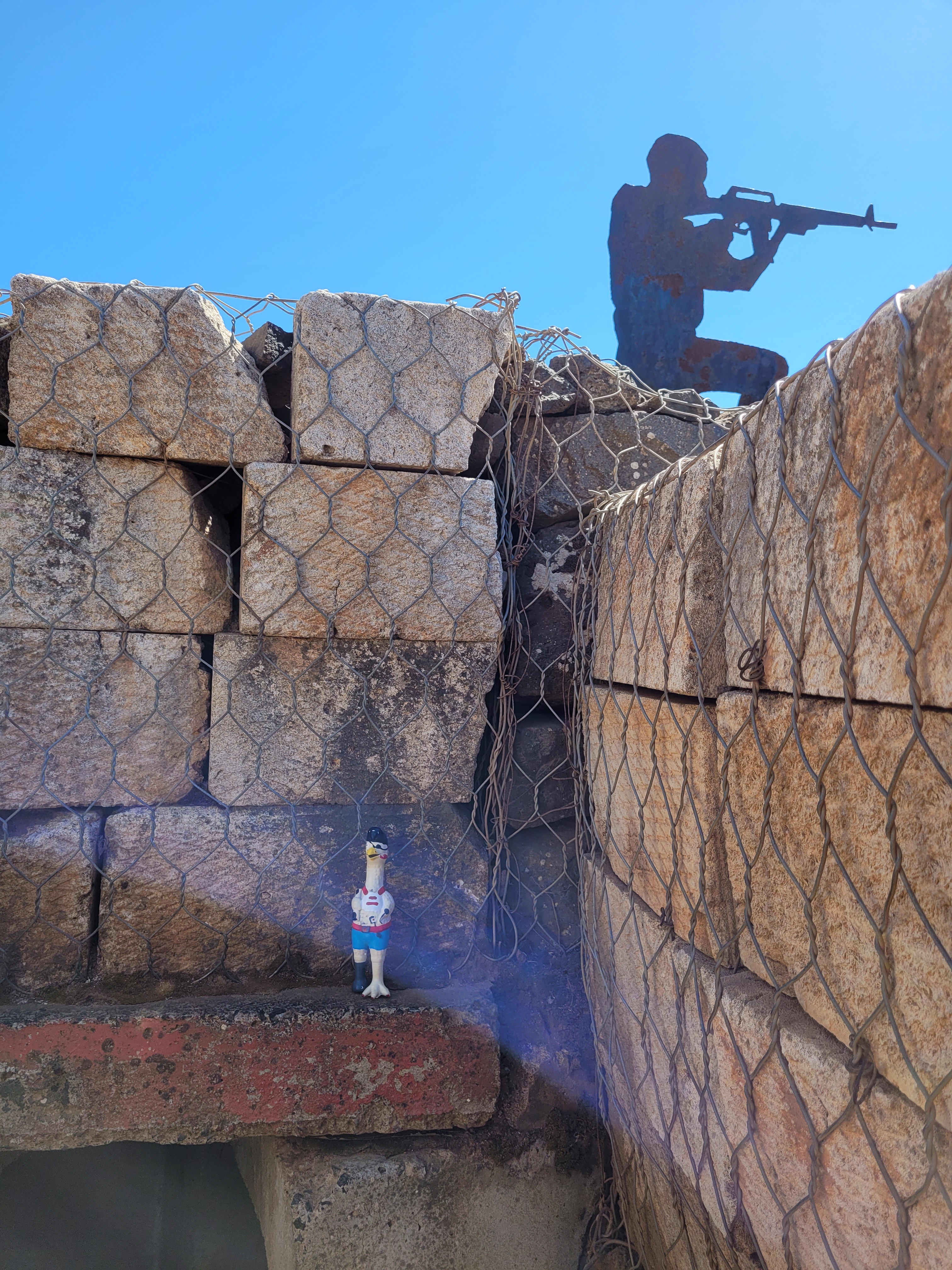
From the Hula Valley, we drove to Mount Bental. Mount Bental is located in Golan Heights and there is an old bunker left over from the old Syrian border. The old army bunkers are now open to the public, having been left over from the Yom Kippur War 1973. According to Wikipedia (because I cannot remember everything that Rafi told us during the visit):

The Yom Kippur War, also known as the Ramadan War, the October War,[72] the 1973 Arab–Israeli War, or the Fourth Arab–Israeli War, was an armed conflict fought from October 6 to 25, 1973 between Israel and a coalition of Arab states led by Egypt and Syria. The majority of combat between the two sides took place in the Sinai Peninsula and the Golan Heights—both of which were occupied by Israel in 1967—with some fighting in African Egypt and northern Israel.[73][74] Egypt’s initial objective in the war was to seize a foothold on the eastern bank of the Suez Canal and subsequently leverage these gains to negotiate the return of the rest of the Israeli-occupied Sinai Peninsula.[75][76][77][78]

https://en.wikipedia.org/wiki/Yom_Kippur_War#:~:text=The%20Yom%20Kippur%20War%2C%20also,led%20by%20Egypt%20and%20Syria.

This was one of the largest tank wars, and by some miracle, Israel won with only 160 tanks. Rafi was a tank man and had a lot of personal stories, and since my dad is a tank man, so he especially enjoyed this part of the trip. At the top of the mountain, you can see all the way to Syria and Lebanon, which really puts in perspective how close the borders are and how precarious this part of the world is.

On the walk from the car park to the bunker, the path was lined with some amazing artwork made out of recycled parts. There was a massive pirate ship that I would have loved to take home with me. PRC certainly would have enjoyed it.

The last stop of the day was at the Tel Shifon Winery. The winery is in a kibbutz and we were able to sample a selection of wine. The tour group sat at massive tables, but because my dad wandered off, there were no seats for us. We sat on some couches near the group, but Rafi sat with us, and because he knew the manager, we got full glasses of wine and chat with Rafi about Israel, his time in the army and his family. It was much better than having to make small talk with the people driving me crazy. Even Raif was amazed at some of the people and their questions. By the time we got to the winery, I think he was happy for the break. The winery had its own tank among the vines which was not something I have seen before.

We ended the day back in Tiberias where we enjoyed dinner at a Lebanese restaurant called Hermitage Tiberias. They had a really cool room that was a stone cutout and we tried a little bit of the local cuisine. Once again we watched the difficult woman in our tour group complain about the way the fish was cooked and the service and generally everything about the restaurant. We weren’t sitting with her, but it was pretty embarrassing how rude she was. The restaurant seemed to be family owned, the staff who served us were okay, and the food was delicious. I was proud of my parents for trying the food there as they are not always the most adventurous of eaters (or at least my mom isn’t).

I feel a bit bad that I didn’t write things down as they happened because we learned so much at each of the places. I was in such need of a vacation that I didn’t journal as I usually do, and now months later, I find myself struggling to remember some of what I learned. I think I know now why my mom saves all the maps and brochures from places. I probably need to start doing that.

The Scamp in Israel Day 4

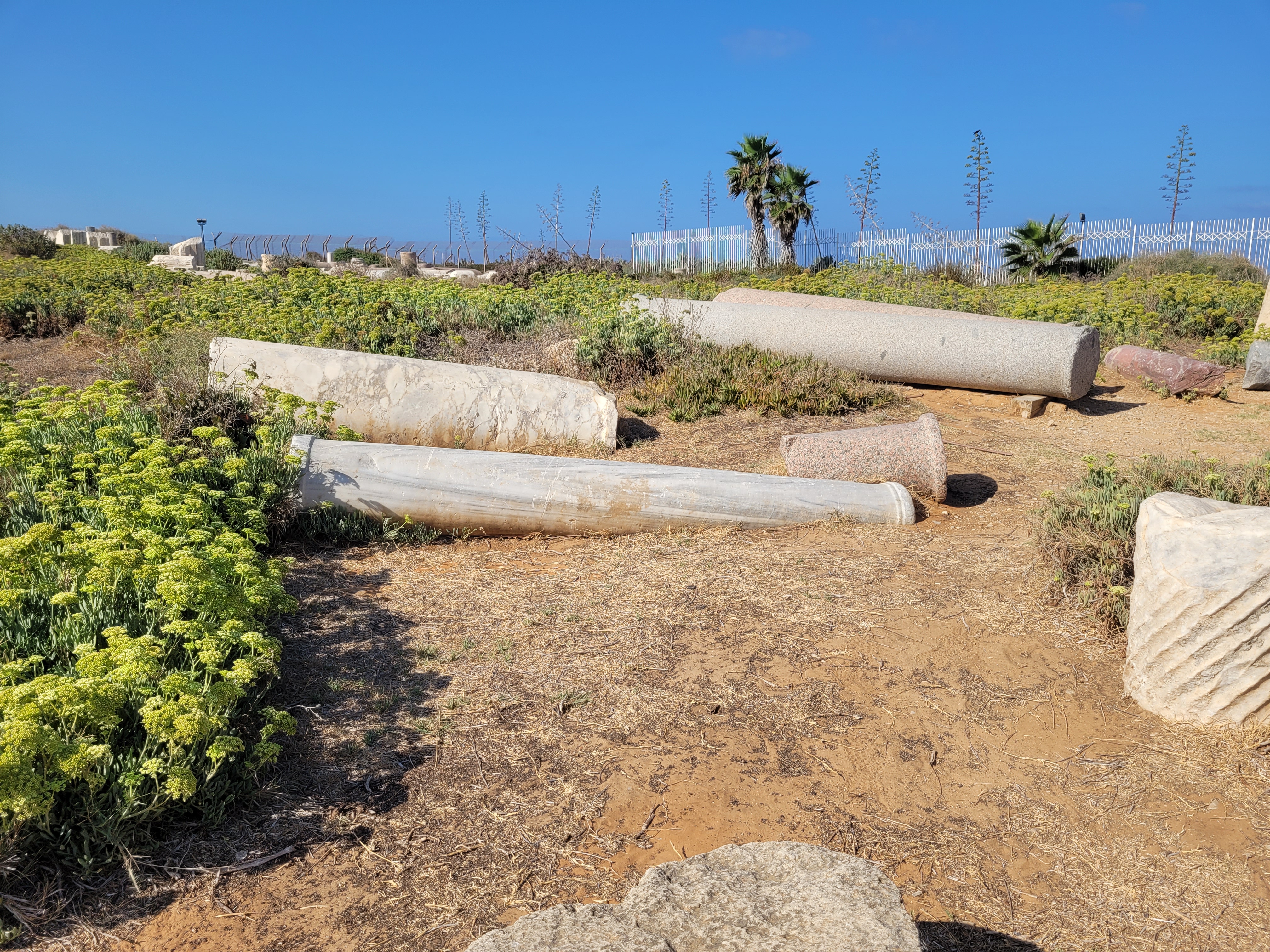
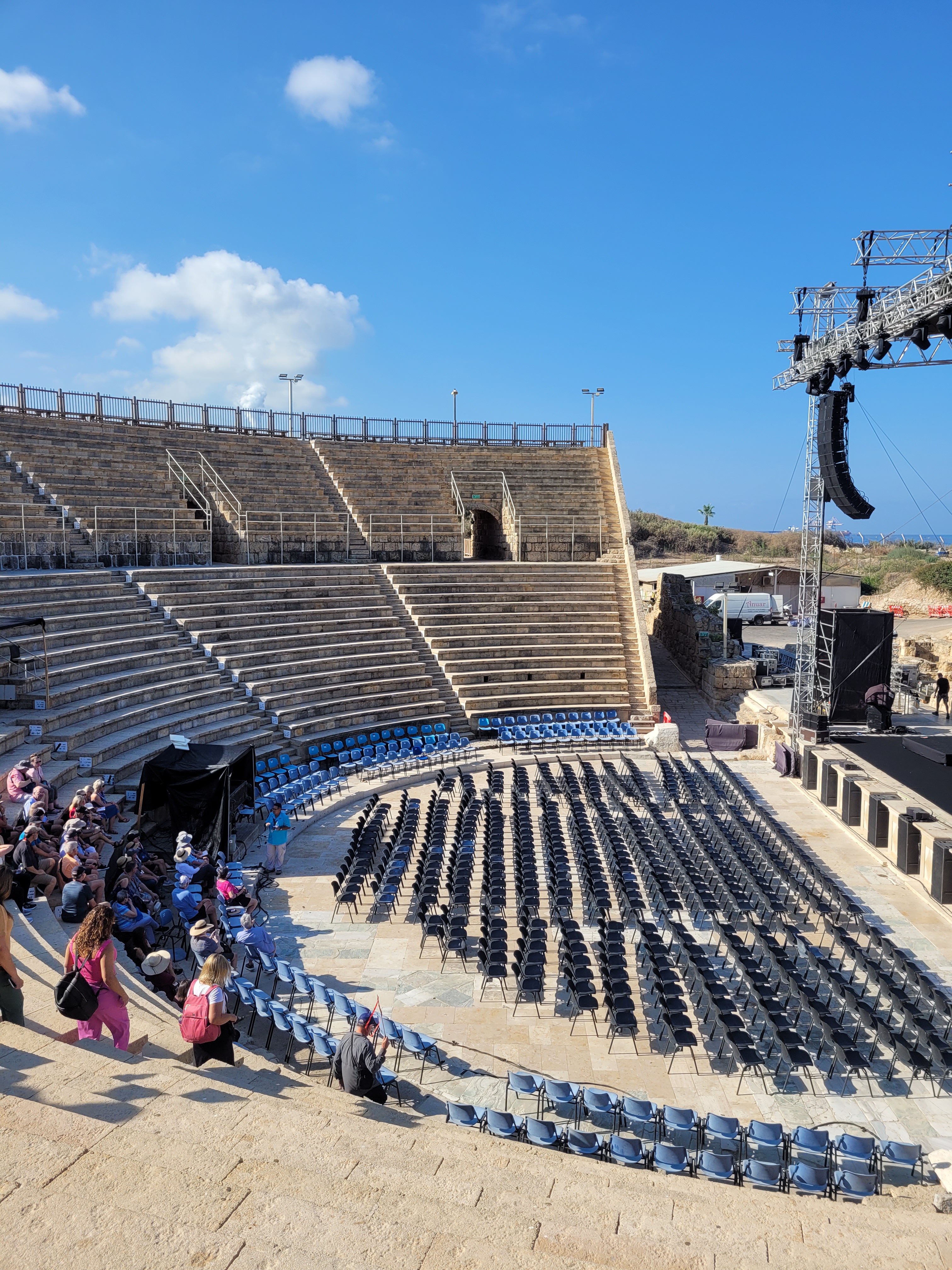
On the bus bright and early for a trip to Caesarea, a coastal area between Tel Aviv and Haifa. It is a national park on the coast that features ancient ruins including the old palace, an amphitheatre still used for concerts today, and an old chariot racing area. It was all built by King Herod . Just outside the park is Adquaduct Beach, where you can enjoy not only an amazing beach but the marvel of the aqueduct. It was warm and there was a total lack of shade, but I love a good wander through history. Rafi has a way of telling you things like they are a story rather than just listing off facts, but the number of annoying questions asked by one of the men in the group caused me to disengage a bit and just soak up the sunshine on my own.

From there we travelled north to the city of Haifa, often called the ‘Capital of the North’. We stopped at the Bahai Gardens, which are considered one of the holiest places for the Bahai faith.

Before we arrived at the gardens, I’d never heard of the Bahai religion. It has been a while since the tour, and I did not write everything down as it happened, so I went to good old Wikipedia to help me out. According to them, Bahai:

The Baháʼí Faith is a religion founded in the 19th century that teaches the essential worth of all religions and the unity of all people. Established by Baháʼu’lláh, it initially developed in Iran and parts of the Middle East, where it has faced ongoing persecution since its inception. The religion is estimated to have 5–8 million adherents, known as Baháʼís, spread throughout most of the world’s countries and territories.

The Baháʼí Faith has three central figures: the Báb (1819–1850), considered a herald who taught his followers that God would soon send a prophet who would be similar to Jesus or Muhammad and was executed by the Iranian authorities in 1850; Baháʼu’lláh (1817–1892), who claimed to be that prophet in 1863 and faced exile and imprisonment for most of his life; and his son, ʻAbdu’l-Bahá (1844–1921), who was released from confinement in 1908 and made teaching trips to Europe and the United States. After ʻAbdu’l-Bahá’s death in 1921, the leadership of the religion fell to his grandson Shoghi Effendi (1897–1957). Baháʼís annually elect local, regional, and national Spiritual Assemblies that govern the religion’s affairs, and every five years an election is held for the Universal House of Justice, the nine-member supreme governing institution of the worldwide Baháʼí community that is located in Haifa, Israel, near the Shrine of the Báb.

According to Baháʼí teachings, religion is revealed in an orderly and progressive way by a single God through Manifestations of God, who are the founders of major world religions throughout human history; Buddha, Jesus, and Muhammad are noted as the most recent of these before the Báb and Baháʼu’lláh. Baháʼís regard the world’s major religions as fundamentally unified in purpose, but diverging in terms of social practices and interpretations. The Baháʼí Faith stresses the unity of all people as its core teaching and explicitly rejects notions of racism, sexism, and nationalism. At the heart of Baháʼí teachings is the goal of a unified world order that ensures the prosperity of all nations, races, creeds, and classes.

https://en.wikipedia.org/wiki/Bah%C3%A1%CA%BC%C3%AD_Faith

After some time to see the garden, we headed southeast to Nazareth. Now those of you who are familiar with the Bible will be really familiar with Nazareth. It is the centre of Christian pilgrimages and the birthplace of Mary. It is the home of the Church of Annunciation.

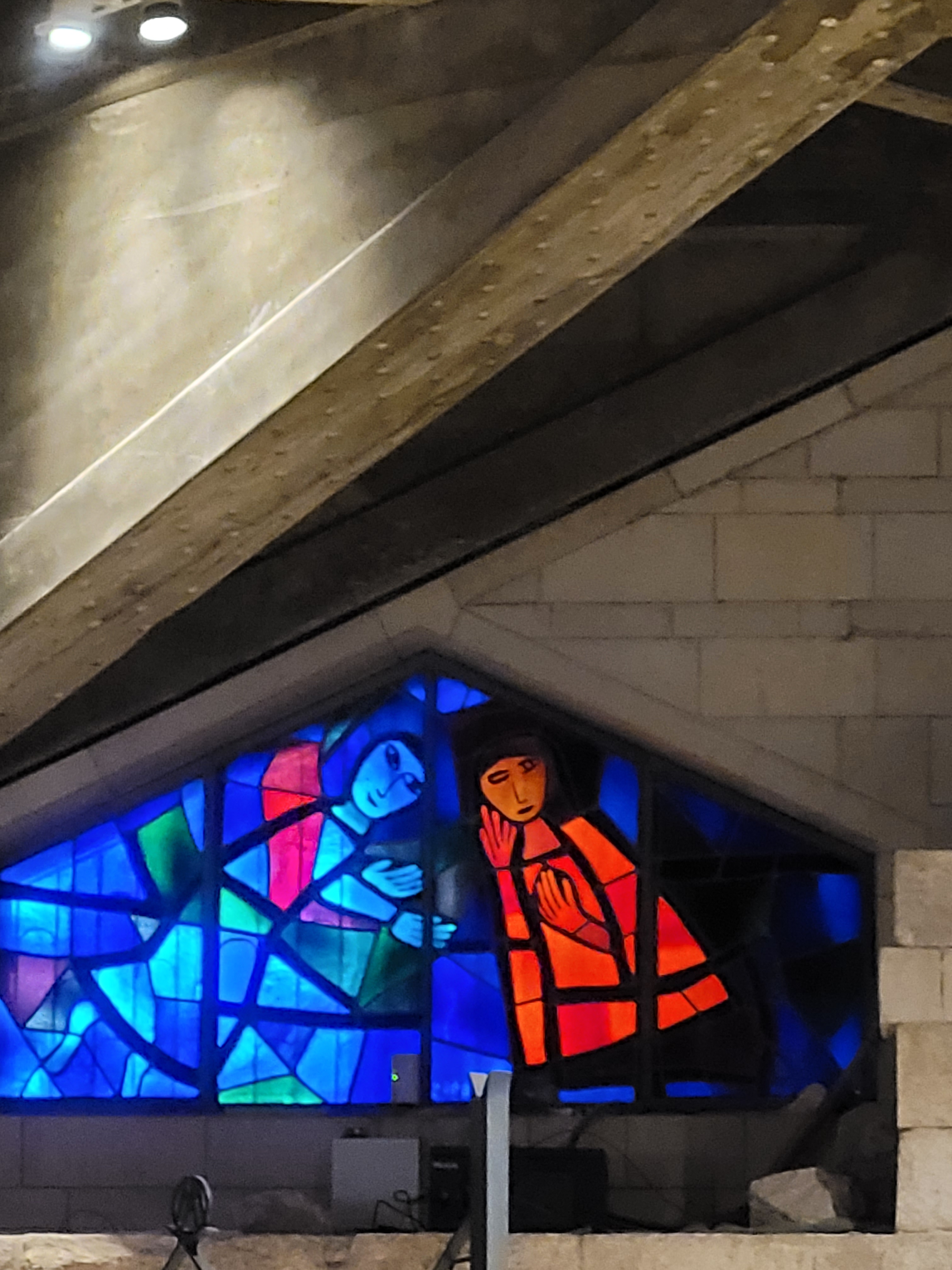
The Church of Annunciation is a really interesting church. It is said to be built on the spot where the Angel Gabriel came to Mary to tell her that she would give birth to Yeshua. The church was built over the site that is said to be the house of Mary (the photo of the altar) and what is said to be Joseph’s workshop. I made friends with the local cats and tried my best to get a kitten into my bag, but he was not quite ready to give up his life hustling tourists for snacks.

The last stop of the day was in the city of Tiberias on the shore of the Sea of Galilee. I had a room with a view….but broke the balcony door when I tried to open it, and had two slightly disgruntled men spend 30 minutes in my room trying to fix it. Luckily my room was connected to my parent’s room, so I just opened the connecting door and hung out in their room while I waited. I swear it was not my fault.

Since we were there for Shabbos, we had a traditional Shabbat dinner, complete with prayers. Now, I’m not super religious by any means, but I do respect the tradition, and I was on a cultural holiday, so more than willing to embrace everything.

….and this is where the problems started. My mom and I were the only Jewish people on the tour, so we had to endure a lot of cultural ignorance. Because it was Saturday, the lifts were in shabbos mode, which means they stop on every floor so that people do not have to push the buttons and ‘do work’ which is prohibited on Saturdays. There were Hasidic and Conservative Jews staying at the hotel, and they take their customs seriously. I ended up sitting next to a woman from Kentucky who was travelling alone. She started the dinner by complaining about the lift being in Shabbos mode and dragging the tradition. She then complained about the rooms, having asked to change rooms three times. She complained about the bar not having bartenders who spoke English (everyone I encountered on the entire trip spoke enough English to help with whatever we needed) and then complained that she couldn’t get a gin and tonic. I tried to explain that Jewish people aren’t really spirit drinkers and that for Shabbos we drink wine, but since it wasn’t expensive white wine, she wasn’t having it. I tried my best to educate her on Judaism and remind her that just because she found aspects of the religion inconvenient, didn’t mean that they weren’t worth respecting. I left the dinner early because I spent all day being respectful of Christian sites of worship, and this woman couldn’t spend half an hour learning about my religion. Sometimes it is exhausting being Jewish and constantly having to deal with ignorance, antisemitism (not that what she was doing was antisemitism), and stereotypes that get hurled at you. Living in Scotland, I constantly hear that I am the first Jewish person that someone has met, and I am nothing like they thought a Jewish person would look or act like.

The best part of the hotel was that the places in the area fed the local feral cats, so there were plenty of little gatitos to pet. I found yet another that I wanted to bring home with me….at least until he bit me when I tried to pet him instead of feed him.

The Scamp in Isreal Day 2 and 3

My second day in Tel Aviv was spent doing one of my favourite things: hunting for Miro’s paintings. While I love being able to spend time with my parents, I also value my solo wandering time, so while they wandered the beach, I took myself to the Tel Aviv Museum of Art. First built in 1932, it became the site for the signing of the Israeli Declaration of Independence in 1948.

The museum did not disappoint. It had a good collection of some of my favourite artists, including Joan Miro.

After my culture shot, I spent some more time by the pool with my mom and then we met the tour group. I wasn’t sure how I felt about the whole thing when we first met Rafi our guide. I was the youngest, but unlike previous trips, not the only one travelling solo. Usually, the Insight Tours are full of couples and families, so it was a nice change of pace to have some other solo travellers…..or so I thought (but more on that later, because it gets really interesting).

The first official day of the tour started with a drive around Tel Aviv and a trip back to Carmel Market, although it was more of a quick walk-through. We then ventured down the seaside to the old city of Jaffa to see the famous clock tower and the harbour. Jaffa is most known for its biblical stories of St Peter, Jonah and Solomon, and is also known for its oranges (for those of you in the UK, think Jafa cakes, which are made with Jafa oranges).

As we wandered the old city we got to see the suspended orange tree, an art installation constructed in 1993 by artist Ran Morin. According to Atlas Obscura:

The roots are enclosed in a large earthenware container and the trunk emanates from a large crack near the top. It’s as if the tree is breaking free of its confines into the warm courtyard air outside. Morin intended for the tree to draw parallels with society’s relationship with nature. 

https://www.atlasobscura.com/places/suspended-orange-tree

What I quickly learned on day 1 of the tour was that Rafi, our tour guide was an amazing man who really knew his history. He had degrees in Sociology, Theology, biology and had been a tour guide for many years. He is a nationalist and grew up as a conservative Jew. He served in the military and especially loves meeting Jewish people who are in Israel for the first time. When he learned that my mom and I were Jewish, he made sure to point things out to us and sit with us at lunch. He also had the patience of a saint to deal with some of the questions that people asked. I have a hard time dealing with the ignorance of others, but some of these people took it to a whole new level. Thank goodness my parents are not always interested in making friends with the people on the bus and we were able to have dinner on our own in an Irish pub….because where else would we take a crusty old Irishman?

The Scamp Visits the Homeland

Happy Passover! I am lucky enough to have been able to sneak away from Edinburgh and come to Prague for a few days. While here, I promised myself that I would catch up on all the fun things I wanted to write about but lost the motivation for. That starts with the trip that I took to Israel in September of 2022.

I’ve wanted to visit Israel for years. I tried to do birthright when I was younger, but just never made it work, so when my parents were ready to come to visit me after a long pandemic, my dad suggested that we take my mom to Israel to celebrate her 65th birthday. I was totally on board with the idea, and my mom went to her trusty Insight Vacations and found an Israel/Palestine trip that was jam-packed with history and culture. We decided to meet in London and travel from there to Israel together, and it was the first time I got to be in the same room with my parents in more than a year.

Needless to say, I was a very happy Kim. We landed in Israel after midnight but had a a couple of days before the tour started to do as we pleased in Tel Aviv. We wandered along the beach to an outdoor market and enjoyed the sunshine and warm weather. The Shuk Hacarmel or Carmel Market is the largest outdoor market in Tel Aviv. According to Tourist Israel:

The Carmel Market first opened in 1920, some eleven years after the establishment of the city. It is an integral part of the history of Tel Aviv. Although much of the trade has now shifted to modern malls and the internet, the market is still immensely popular. Its narrow street is busy whenever you visit, particularly before Shabbat on Thursdays and Fridays, as residents buy supplies for their family meals. Recent years have seen a growing number of boutique stalls and food places opening alongside the traditional traders. They range from boutique beers to arrays of halva, and small eateries who take advantage of the market’s produce.

The Carmel Market is relatively simple in layout and location. The ‘Shuk’ occupies one street which runs south from the junction of King George Street, Allenby, and Sheinkin Street to the Carmelit Bus depot in the south. The side streets off of the market also host some small traders. The activity is not as spread out as in Jerusalem’s main market, Machane Yehuda.

https://www.touristisrael.com/carmel-market-tel-aviv/4433/

One of the best things about the first hotel was the rooftop pool. Summers in Scotland aren’t really known for their sunshine, so I am usually in desperate need of a tan (even now, I am appallingly white after a long harsh winter). We ended the first day in my favourite way…..getting tattooed. I can usually talk my mom into a tattoo, but this time I was able to talk my dad into not one, but two tattoos! I’ve been getting tattooed for 18 years and he has never been okay with it, but I was finally able to talk him into it, and now he has a cross and Star of David to represent his family. We went to Kipod Tattoo shop, and both got tattooed by Lera Torgovitsky. She was amazing! She’d done her time in the military, and when we saw her, she was getting ready to take her mom to a music festival in Sweden. I absolutely loved her, and so did my dad.

It has been months, and I still cannot believe that my dad actually got tattooed.