The Scamp in Prague, Czech Republic

One of my favourite things to do when I visit any new country is visit the Jewish Quarter.

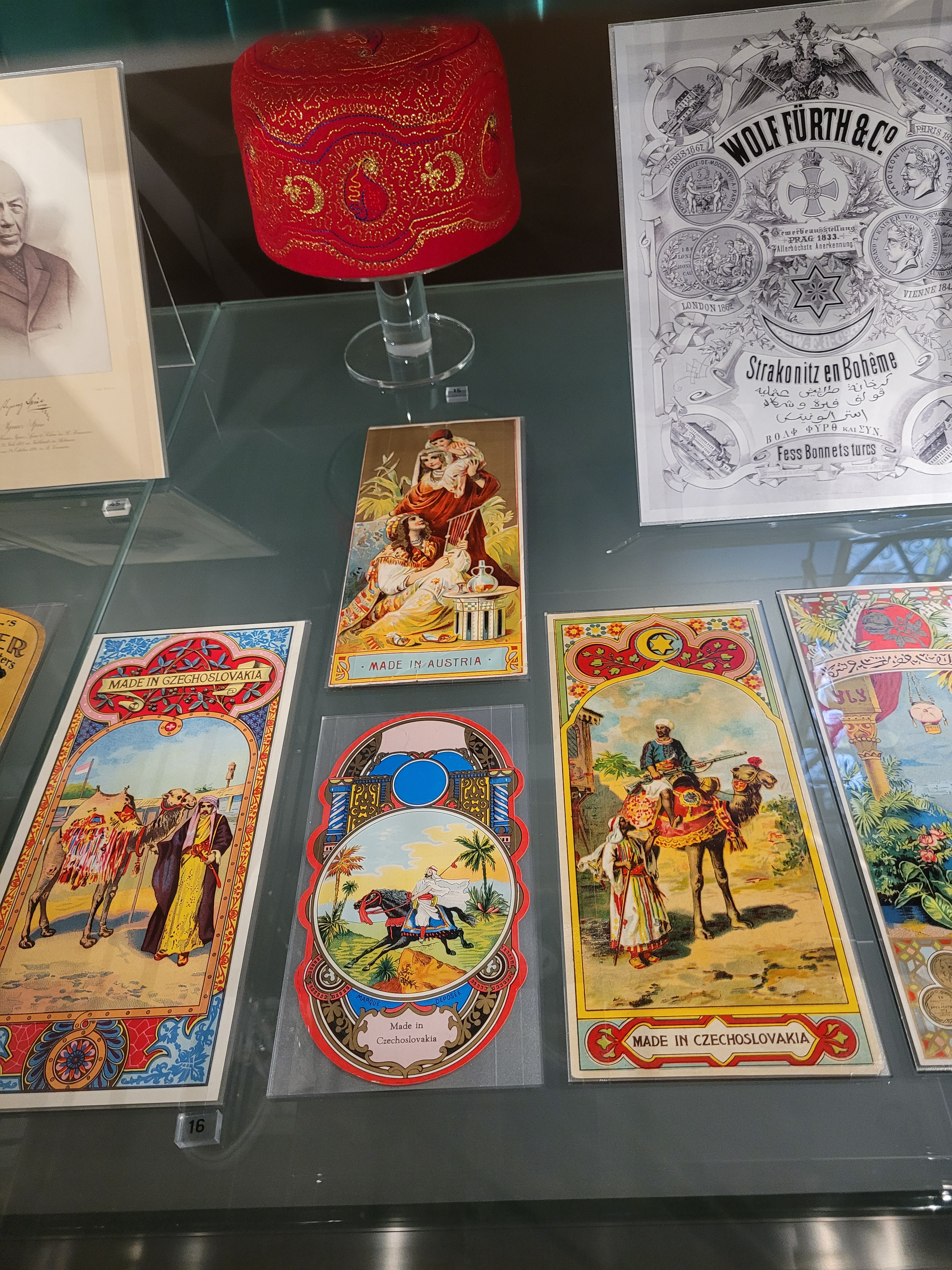
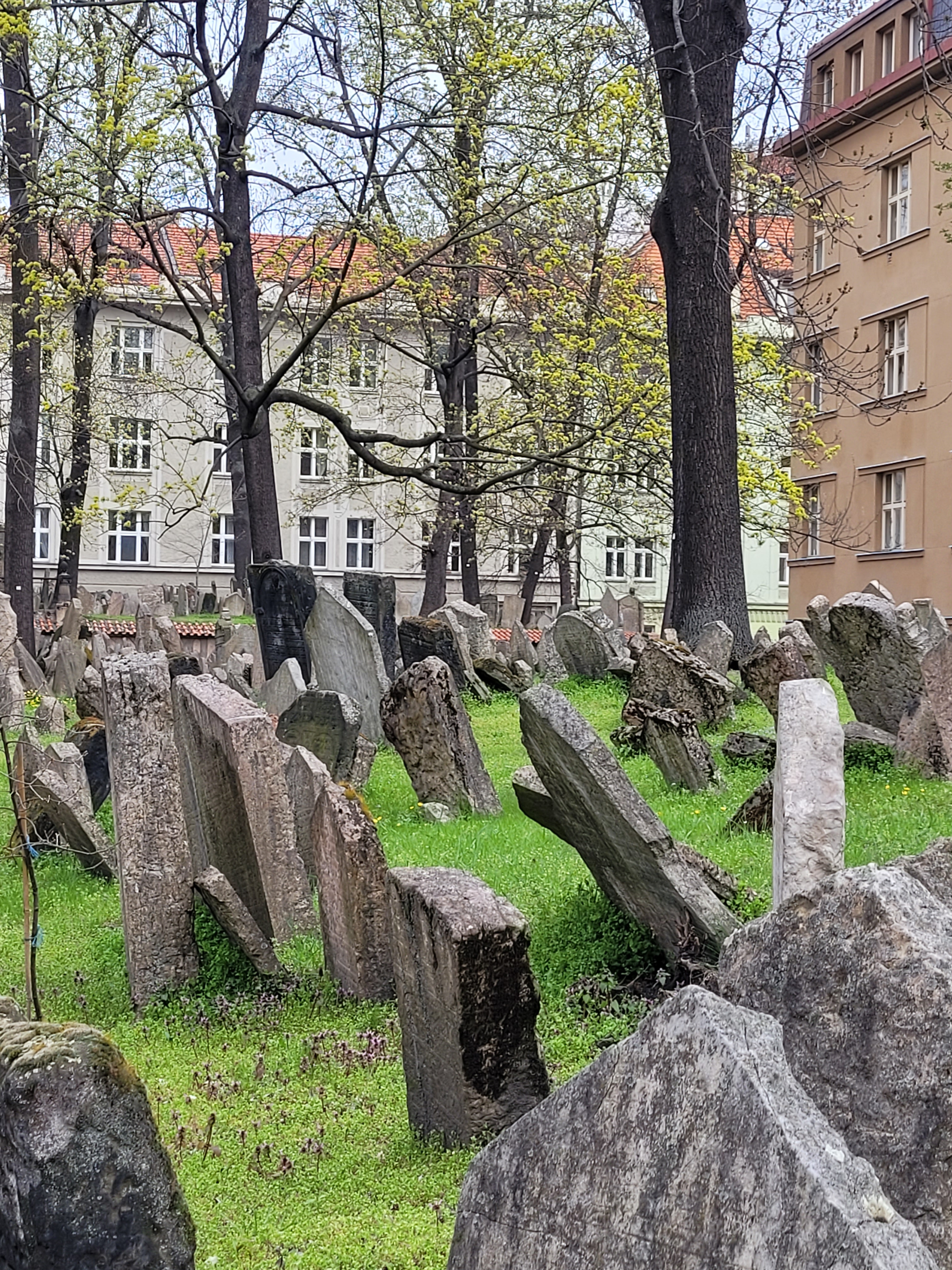
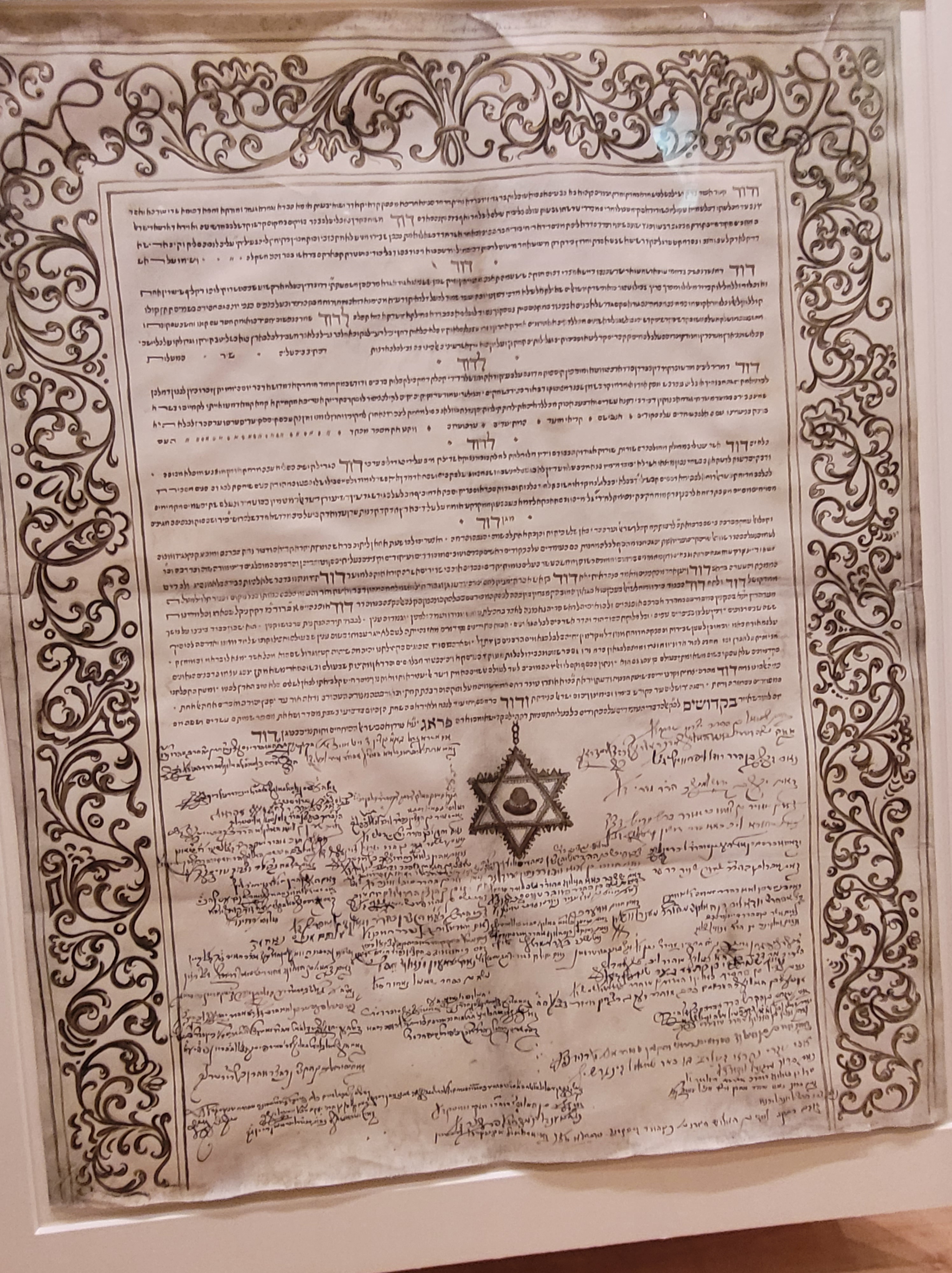
Prague has a rich history of Jewish culture and a really nice Jewish Quarter to visit. I spent the entire day visiting the different Synagogues. Each one comes with its own unique history and stunning architecture. The quarter has been declared a UNESCO World Heritage Site since 1992, and is home to one of the oldest operating temples in Europe. I spent the day just enjoying the architecture and although I have notes about all the facts for each one, I have no idea where I put them. One day I’ll come back to this if I ever find those notes.

The first on the list was the Old/New Synagogue. It was built in 1270 and according to prague.eu/en/objevujte/old-new-synagogue-staronova-synagoga:

Legend says that the ancestors of the Prague Jews built the Old New Synagogue as long as two thousand years ago, after the destruction of the so called Second Temple in Jerusalem (which happened in the year 70 A.D.) Hewn blocks from the shattered Jerusalem sanctuary were brought to Prague by heavenly angels, who built a beautiful chapel here. When the Messiah comes to gather the children of Israel, the angels will bring the blocks back to Jerusalem to build a new Jerusalem sanctuary, the third already.

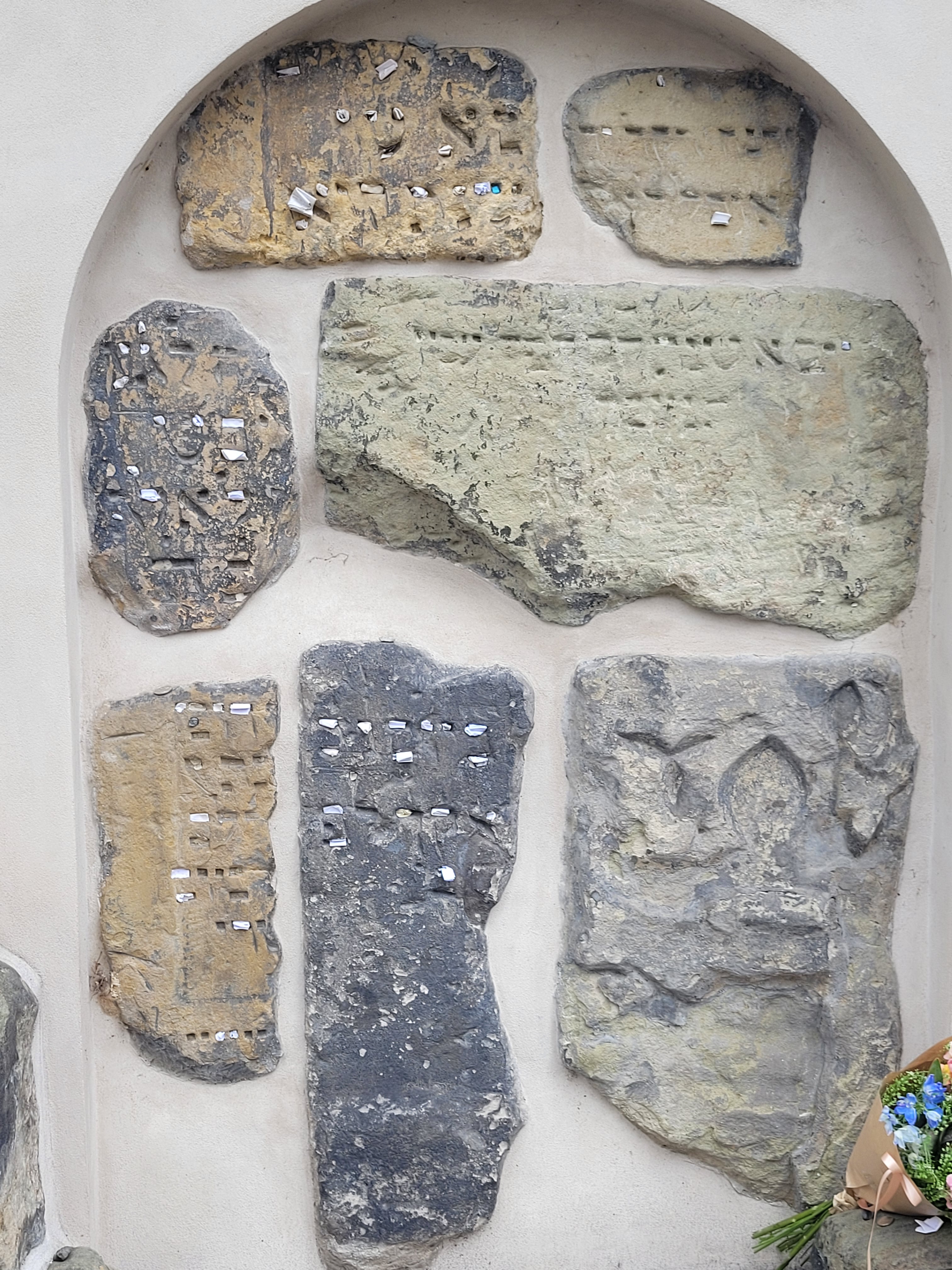
The next Synagogue I visited was the Pinkas Synagogue. It was built in 1479 and is the entrance to the cemetery. This Synagogue has been turned into a memorial for the 77,297 Jews who died in the Holocaust. The names of all the victims cover the walls of the temple as a reminder that their memory will always be a blessing.

I continued the tour and wandered to the Maisel Synagogue. This one was built in the 16th century. It is now a museum and collection of all things Jewish culture.

The next on the list was the Klausen Synagogue, which is the largest of the collection in the quarter. It was built in 1694, and focused on Jewish cultures and traditions.

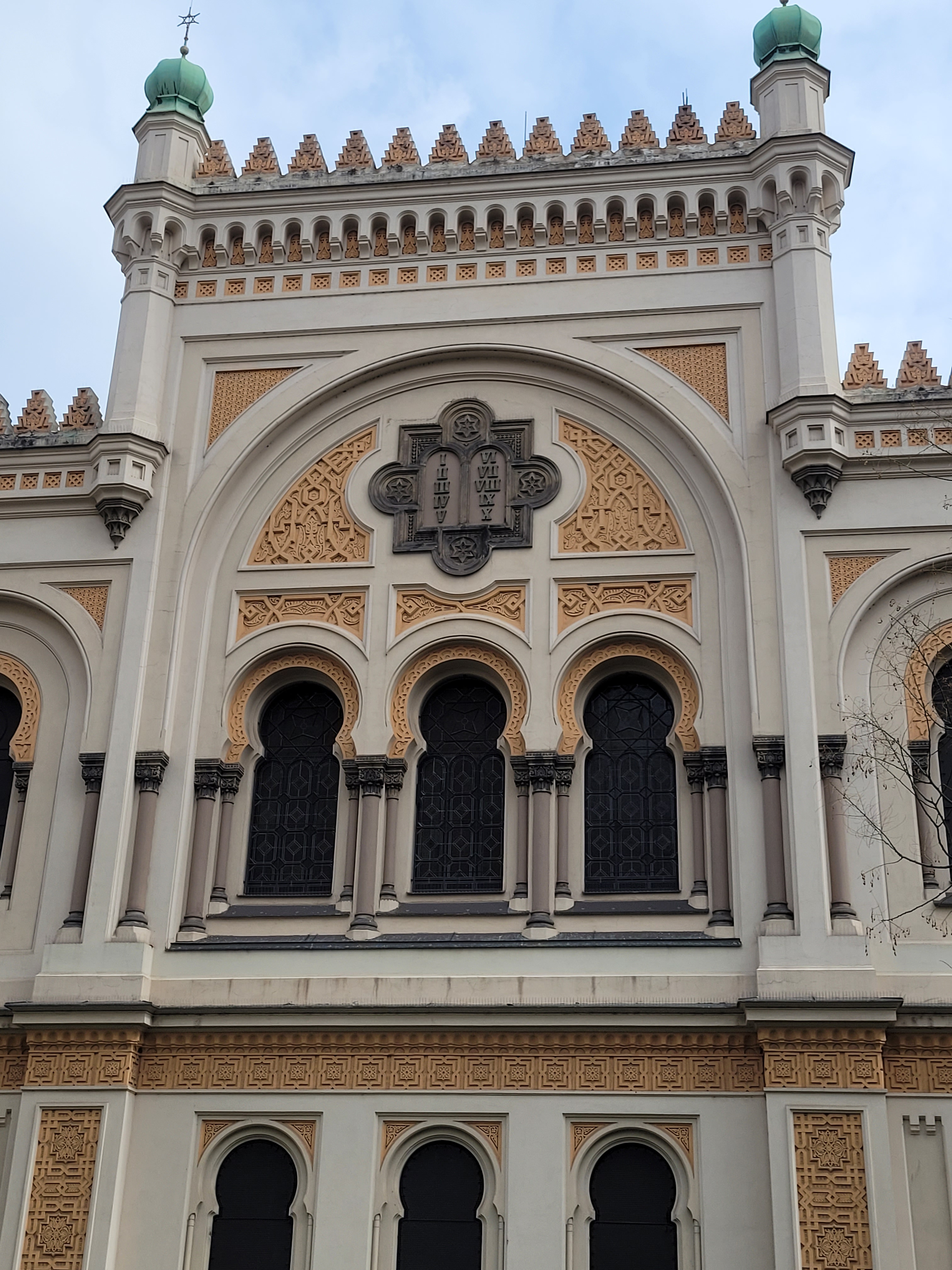
I followed this by a walk to the Spanish Synagogue, which was built in 1868 and looks a lot like the Alhambra in Spain.

I enjoyed the tour of the quarter and spending some time with the culture. It was nice to see people actually taking in all of the names of the people who died and seeing how important the culture is to the city.

It was a great way to end the trip. I highly recommend that people visit Prague. The food is good, the people are lovely and the city is easy to navigate with no shortage of history.

The Scamp in Israel Day 8

It seems strange to be writing about Israel when so many people in the world right now are calling for the destruction of the country. This week was Israel’s independence day, and all the articles that I saw in the UK were centred on the 76 years of Palistine’s occupation. It is hard living in a country that doesn’t respect Jewish people, and to see so many of the people around me spouting antisemitic rhetoric while protesting a ‘genocide’ as if they don’t understand what a war is. While I have a very complicated belief about the current war, I understand the history of the area and who has claimed the land at different stages of time.

But, that is not fun to think about, whereas my time in Israel and Palestine was fun. Day 8 found us in Bethlehem where we got to visit the Church of the Nativity. This is one of the oldest continuously run churches in the world. It is currently run by three different religious groups, Greek Orthodox, Catholics and Armenian Apostolic. You can see the influences of the different religions in the architecture and the way that the church is decorated. It is within this church that the spot where Jesus was born is marked with a 14-pointed silver star.

We then wandered through the city and did the stations of the cross, stopping at each site in the busy city streets. We ended at the Church of the Holy Sepulchre (which is called the Church of the Resurrection).

This was the last part of the tour, so my parents and I went back into the city for a final dinner together. I ended up having a very rushed goodbye with them at the airport and didn’t get to see them again for almost 10 months. It was worth spending time with them though and learning a lot more about the region. Israel is a place I would visit again, and Tel Aviv is a city that I could see myself living in. It makes me sad to think that some of these places have been destroyed because of the war or that some of the people that we met could be dead, or could have family who have died. I wonder what happened to our tour guide Rafe. He has such a love for Israel and had such a love for the fact that we were Jewish and he could show us our culture in a real and in-depth way.

It is one of the best vacations I have ever taken, and I hope to return to Israel one day.

The Scamp in Israel Day 7

I took another long break from writing. Shortly after my last post on October 7th, Hamas led an attack on Israeli soil, the first since the first since the Arab-Israeli War in 1948. 1,200 Jewish people were killed, and a resurgence of Israel-Hamas war has now divided the world.

I find myself in a place today where a little bit of writing about something fun might pull me out of the sadness of the last few months.

Day 7 saw us taking a cable car ride up Mount Masada, the fortress of Herod the Great. According to UNESCO World Heritage:

It is a symbol of the ancient kingdom of Israel, its violent destruction and the last stand of Jewish patriots in the face of the Roman army, in 73 A.D. It was built as a palace complex, in the classic style of the early Roman Empire, by Herod the Great, King of Judaea, (reigned 37 – 4 B.C.). The camps, fortifications and attack ramp that encircle the monument constitute the most complete Roman siege works surviving to the present day.

https://whc.unesco.org/en/list/1040/#:~:text=It%20is%20a%20symbol%20of,reigned%2037%20%E2%80%93%204%20B.C.).

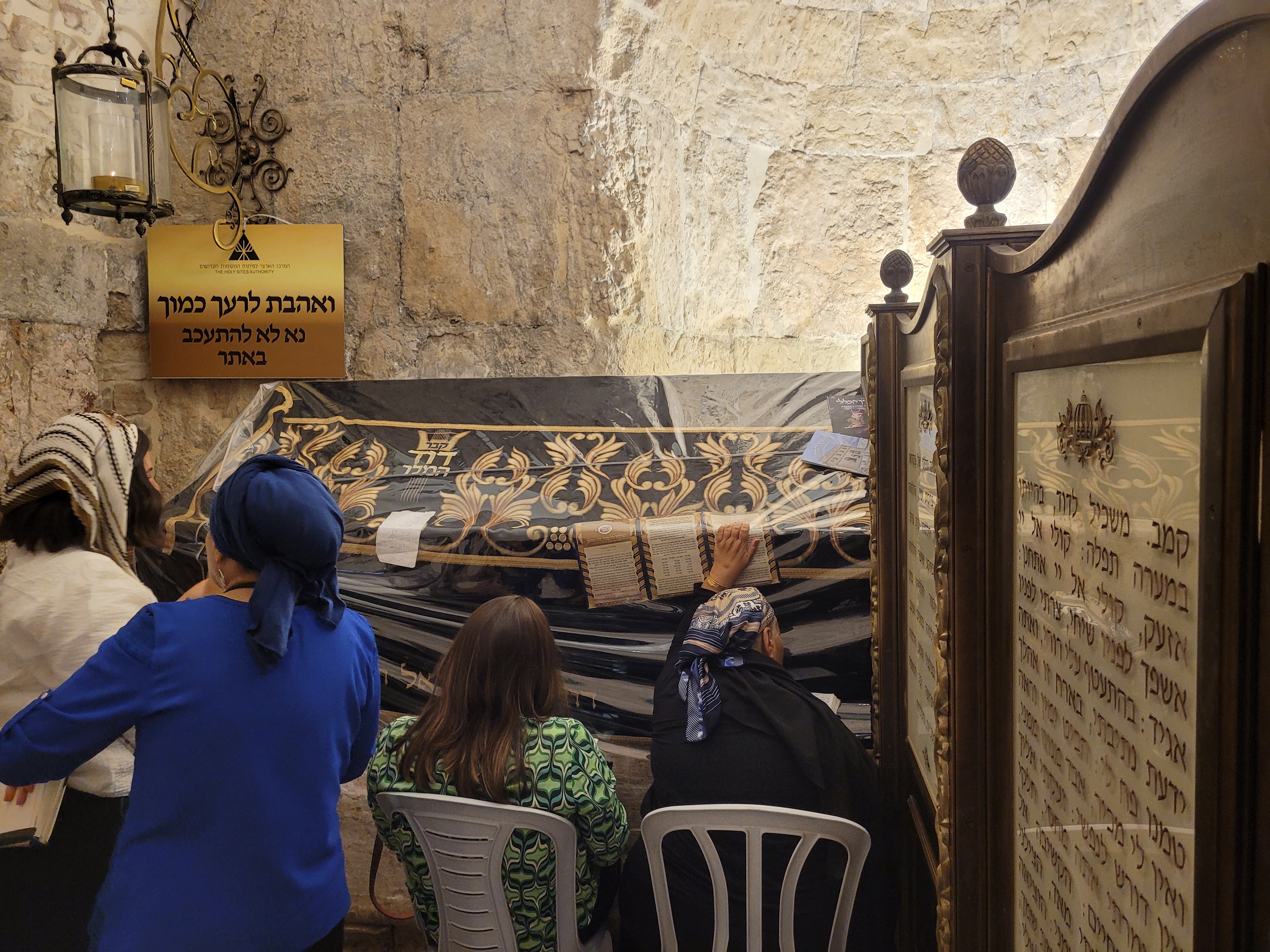
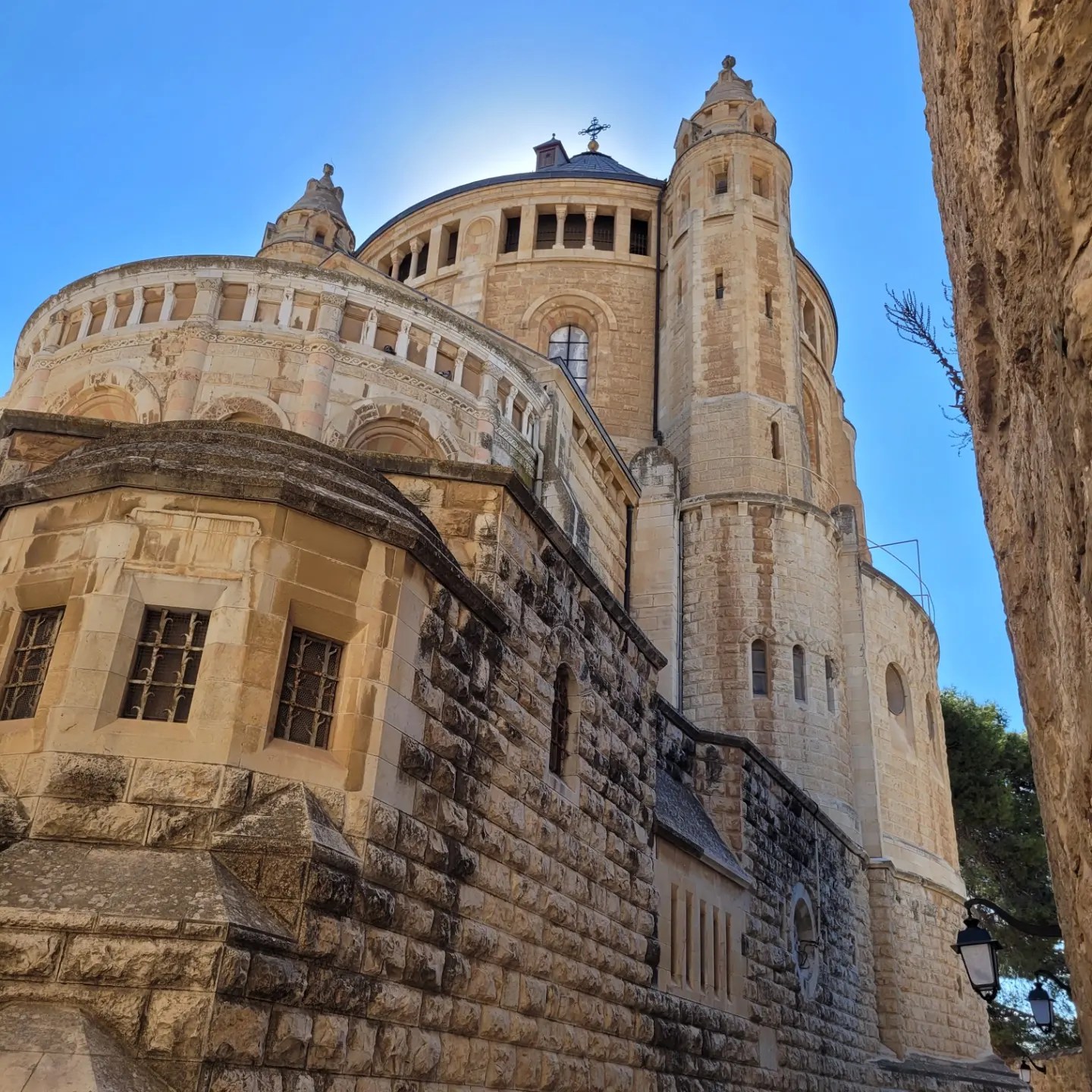
After Mount Masada, we took a drive through the Judean Hills to Mount Scopus to get the best views of Jerusalem. We then went to Mount of Olives where the western part of the slope has been used as a Jewish cemetery for 3,000 years. It is also the place where Jesus is said to have ascended to Heaven. The tour ventured to Mount Zion and King David’s tomb, the site associated with King David’s burial. The tomb is on the ground floor of a church that is said to hold the room of the Last Supper.

We ended the night at the Western Wall. The Western Wall (called the Wailing Wall by most people in the West), is an ancient limestone wall in the old city of Jerusalem in the spot known as Temple Mount. It is the holiest spot for Jewish people to pray as it is believed to be the last part of our Holy Temple. There is a tradition at the wall where people leave notes in the cracks of the wall for health and wellbeing. My mom and I left a note of health for a friend of ours who has cancer and generally took in the magnitude of such a place. I don’t cry much (okay, that’s a lie, I cry all the time), but it was such an overwhelming feeling seeing women praying and practising sorrow meditation.

One of the things that bothered me on this tour was that my mom and I were the only Jews doing the tour so we had to deal with the ignorance of a lot of the people on the tour. While Jewish women were praying at the wall, many of the women in our tour group were taking selfies or photos of their hands touching the wall. I have limited patience for the ignorance of others, and these people seemed completely oblivious to the seriousness of where we were. I’d been dealing with this for the entire trip, and I’m not sure I was great at hiding my facial expressions most of the time. Even our tour guide had a hard time with a lot of these people. He’d sit with me at the group dinners or walk with me when we were going to different sites and talk to me about the people and fun places to visit in the city when we had some free time.

This was the start of the wind-down of the trip and I was not ready to have to say goodbye to my parents. I never look forward to that part of my trip.

The Scamp Gets Ready for Pesach

Before I get into the fun that I am having preparing for Passover, I want it to be known that this is post 499 of The Adventures of a Scamp Abroad. I always have a big post planned for the different milestones, and my 500th post will be no different.

Now on to the matters at hand. Sundown tonight marks the start of one of my favourite holidays, Pesach (also known as Passover). I love Passover for the same reason I love Thanksgiving, it is the holiday where everyone comes together as a family to celebrate.

But what is Passover you might ask? The good people at chabad.org have put together a really nice explanation of the holiday.

The eight-day festival of Passover is celebrated in the early spring, from the 15th through the 22nd of the Hebrew month of Nissan, April 8 – April 16, 2020. Passover (Pesach) commemorates the emancipation of the Israelites from slavery in ancient Egypt. Pesach is observed by avoiding leaven, and highlighted by the Seder meals that include four cups of wine, eating matzah and bitter herbs, and retelling the story of the Exodus.

In Hebrew it is known as Pesach (which means “to pass over”), because G‑d passed over the Jewish homes when killing the Egyptian firstborn on the very first Passover eve.

The Passover Story in a Nutshell

After many decades of slavery to the Egyptian pharaohs, during which time the Israelites were subjected to backbreaking labor and unbearable horrors, G‑d saw the people’s distress and sent Moses to Pharaoh with a message: “Send forth My people, so that they may serve Me.” But despite numerous warnings, Pharaoh refused to heed G‑d’s command. G‑d then sent upon Egypt ten devastating plagues, afflicting them and destroying everything from their livestock to their crops.

At the stroke of midnight of 15 Nissan in the year 2448 from creation (1313 BCE), G‑d visited the last of the ten plagues on the Egyptians, killing all their firstborn. While doing so, G‑d spared the children of Israel, “passing over” their homes—hence the name of the holiday. Pharaoh’s resistance was broken, and he virtually chased his former slaves out of the land. The Israelites left in such a hurry, in fact, that the bread they baked as provisions for the way did not have time to rise. Six hundred thousand adult males, plus many more women and children, left Egypt on that day and began the trek to Mount Sinai and their birth as G‑d’s chosen people.

The holiday is celebrated with a seder. This is a retelling of the Jews exodus from Egypt and a time for both young and old to come together and think about their history. That history is in the Haggadah, or central reading for the seder. As My Jewish Learning states

The script for this central ritual of Passover is the Haggadah (literally, “telling”). It contains questions and answers, stories, show and tell, song, food as reward and symbol, pathos, and suspense. The creation of this script took place over hundreds of years at the beginning of the Common Era. There is evidence that parts of the seder were in a fixed format by the time of the Mishnah (second to third century CE). Midrashim were added and the current traditional version was fixed soon after.

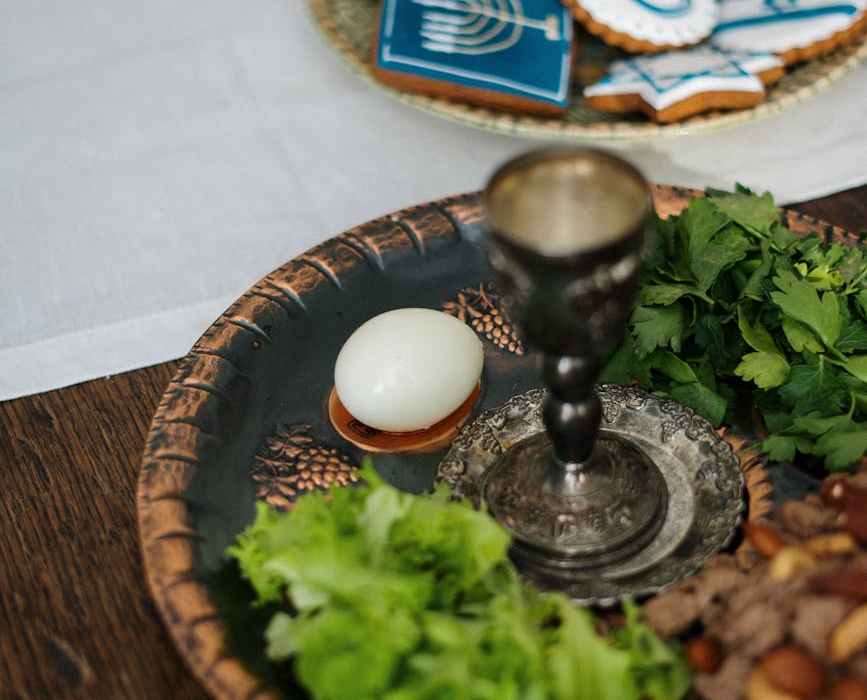
There is a seder plate that represents the various themes of the Haggadah (I’ve provided a link to a nifty little video to explain the significance).

The Seder Plate

Just for fun, My Jewish Learning has also put together a list of vocabulary to help everyone at their first seder. They are:

Passover Greetings (in alphabetical order)

A zissen Pesach — Have a sweet Passover! (Yiddish)

Chag aviv sameach — Have a happy spring holiday! (Hebrew)


Chag kasher sameach — Have a happy and kosher holiday! (Hebrew)

Chag sameach — Have a happy holiday! (Hebrew)

Moadim l’simcha — May your times be joyous! (Hebrew, said only during the Hol Hamoed, or intermediate, days of the holiday)

Passover Vocabulary (in alphabetical order)

Afikomen —From a Greek word meaning “dessert.” A piece of matzah that is hidden during the course of the seder , found after dinner, and eaten as dessert at the end of the seder meal.

Arba Kosot — Hebrew for “four cups.” In this case, it refers to the four cups of wine drunk at the Passover seder.

Barekh— The 12th step of the Passover seder, in which Birkat Hamazon, the grace after meals is said.

Beitzah — Hebrew for “egg.” A roasted or hard-boiled egg is placed on the seder plate to symbolize rebirth.

Chad Gadya —Aramaic for “one goat,” this is the last of the songs sung at the conclusion of the seder and tells the story of the little goat a father bought for a pittance. Listen to the song below. Find lyrics here.

Chag Ha Aviv — Hebrew for “The Spring Holiday.” One of the alternate names for Passover.

Dayenu — Hebrew for “enough for us,” this is the name of a song sung at the Passover seder that tells of all the miracles God performed for the Israelites. Listen to it and see the transliteration in this video below.


Gebrochts — Yiddish for “broken,” this refers to matzah that has absorbed liquid. It is customary among some Orthodox Ashkenazi Jews to avoid gebrochts as an extra stringency on Passover.

Haggadah — Hebrew for “telling” or “recounting.” A Haggadah is a book that is used to tell the story of the Exodus at the seder. There are many versions available ranging from very traditional to nontraditional, and you can also make your own.

Hallel — The 13th step of the Passover seder, in which psalms of praise are sung.

Hametz — Bread or any food that has been leavened or contains a leavening agent, hametz is prohibited on Passover.

Haroset — A sweet mixture of nuts, wine, and apples on the seder plate that symbolizes the mortar used by slaves in Egypt.

Hol HaMoed — The intermediate days of the holiday, between the first two days of holiday, and the last two days of holiday.

Kaddesh —  The first step of the Passover seder, in which a blessing over a glass is recited.

Karpas — The third step of the Passover seder, in which a piece of greenery such as parsley is dipped into salt water and then eaten.

Kitniyot — Hebrew for legumes, the term here also includes corn and rice. These items were prohibited for use on Passover by some Ashkenazic rabbis in the medieval period, but many Sephardic Jews (and increasingly Conservative Jews) do allow them on Passover.

Korekh — The ninth step in the Passover seder, in which bitter herbs are eaten together with a piece of matzah.

Maggid — The fifth and most substantial step of the Passover seder, in which the story of the Exodus is recounted.

Maror — Bitter herbs. The eighth step in the Passover seder, in which the herbs (usually horseradish), symbolizing the bitterness of life under Egyptian rule, are eaten.

Matzah — Unleavened bread. According to the Bible the Israelites ate matzah right before they left Egypt. Today matzah is eaten during Passover to commemorate the Exodus from Egypt.

Motzi Matzah — The seventh step in the Passover seder, in which a piece of matzah is eaten.

Nirtzah — The 14th and final step of the Passover seder, in which the night is concluded by saying “Next year in Jerusalem.”

Pesach —Hebrew for “pass over.” Cooked meat that, according to the Bible, was eaten by the Israelites just before they left Egypt.

Rahtza — The sixth step of the Passover seder, in which the hands are washed for a second time, and a blessing is recited.

Seder — Hebrew for “order.” The Passover ritual where family and friends gather on the first one or two nights of Passover to retell the story of the Exodus. The story is told in a particular order, with specific rituals.

Shir Hashirim — The Song of Songs, the text read in synagogue during the Shabbat of Passover.

Shulhan Orekh— The 10th step in the Passover seder, in which the meal is served. Pass the matzah balls!

Tzafun — The 11th step of the Passover seder, in which the afikoman is found and eaten as dessert.

Urchatz — The second step of the Passover seder, in which the hands are washed but no blessing is recited.

Yahatz — The fourth step of the Passover seder in which a piece of matzah is broken in half.

Zeroa — Shank bone. The bone is placed on the seder plate and recalls the blood on the doorposts and the terror and the anticipation of the night of the plague of the first born.

In my family, Passover is always celebrated at my Great Aunt’s house with a big seder and something fun to tie the kids in. The last one I went to had a play before dinner, and a few years ago we had plastic plagues that we all threw at each other during the readings. I miss these traditions when being so far away, and in a country that is not exactly Jewish friendly, but I have not let it stop me from trying to celebrate in my own way.

This year is extra strange given that we are on lockdown and can’t get together even if we wanted to. I’ve got most of the supplies that I need (although there is no matzah at any of the stores I am allowed to go to, and I can’t really be out and about all day trying to hunt it down…I do have some flat crackers though as a stand-in. Same with the Haroset, but I have a sweet jam that should do the trick). Tomorrow I’ll use my electronic version of the Haggadah, stretch out on my couch and have some unlevean bread and some sweet macaroons for dessert.

Hopefully next year I won’t be in lockdown so I can be better prepared with the food options for the seder, and maybe I can talk some of my friends here into attending. So until then, chag sameach everyone and find a fun way to celebrate!

References 

The Passover (Pesach) Seder

https://www.chabad.org/holidays/passover/pesach_cdo/aid/871715/jewish/What-Is-Passover-Pesach.htm

Must-Know Passover Terms
The Scamp is Accidentally Funny

Today I finally got an email from a supervisor that I am excited about.

I am a handful of edits away from a complete draft of my theory chapter. Considering the last draft I submitted was ‘confusing’ and ‘unclear,’ I am so chuffed that I am almost done. Of course, I would not have been able to get that far without having sent the draft to my mom as an extra set of eyes. Turns out, I am not as bad a writer as I thought.

I may actually finish this thesis.

That aside, I have been dipping my toe into the festival. I went and saw Ari Shaffir do a set on being Jewish and it was the best thing ever. I laughed the entire time. He’s in the city this month to prepare for a Netflix special, and I cannot wait until the final set is done. It probably won’t be half as funny though when it isn’t done in front of a room full of people who know nothing about Judaism.

Since one of the besties is in theatre, and working during the festival, when she mentioned that she was out and about, I knew I had to detour in her direction. She introduced me to the writer for the show she is working on, and to a casting director and I felt like my job is borning in comparison so I blurted out the most outrageous thing I could think of: I was an accidental Jewish guest at a white supremacist wedding.

The story was a big hit with the crowd, and I think maybe it is time I shared it with the world.

The rest of this is the how the big day unfolded to the best of my recollection. I am going to try and avoid using names, although most of my family and friends from California will have an idea of who this is.

When I was 21 years old, I was dating a very sweet guy who lives in Hollywood. The house he grew up was the house that his dad grew up in, and his dad knows everyone and anyone. He has amazing stories that he likes to tell (often on a loop. I heard the same ones a lot in the two years I dated his son) and was often collecting strays that would live at the house for anywhere from a few days to a few months, to a few years. It was one such stray that had been cared for by the family that asked if he could have his wedding in the giant front yard of the Hollywood house.

It was summertime (I think it was June) and I spent my time going back and forth between my parent’s house in Orange County to the boyfriend’s house in Hollywood. I got to the house in the late afternoon for the rehearsal dinner. The first thing that I noticed was the motorcycles and muscle cars. I have an El Camino and the boyfriend has a classic Mustang (I loved that car), so I was immediately interested in the cars.

Unfortunately, that was the last thing I was interested in for the rest of the weekend. I walked into the house and felt like I had walked into a Klan meeting. The groom was a tall dude covered in tattoos. He was wearing jeans and white undershirt with the sleeves rolled rockabilly style. His tattoos showcased his love of his heritage….including the swastika on his neck. The bride to be was also covered in tattoos and piercings, including the SS lightning bolts. Their friends looked much the same. During the course of the party, the two got more and more hammered and then shared how they met. They had met through MySpace (which tells you how long ago this happened) when they each thought the other was someone else. They talked for a couple of weeks before they realised the mistake that they had made, and after a few laughs (and not a lot of time) they decided that they couldn’t live without each other and decided to get married.

Strong foundations for a good marriage, right?

The next day my boyfriend and his friends helped put out chairs, make sure the front yard was clean and went about helping set up for the BBQ after the ceremony. The best man, my boyfriend and I went to get as much ice as we could for all of the booze that was now sitting in the driveway of the Hollywood house. During this outing, I learned that the best man was married, he liked muscle cars, and he had a habit of lingering a little bit too long when he touched me. I changed into a nice sundress and tried to stay out of the way while everyone got dressed. The wedding party had been drinking since about 9am, and by the time guests started arriving, the wedding party was beyond three sheets to the wind. Even my boyfriend’s dad was drunk….and he was the one in charge of officiating the wedding!

The best guest of the day was the mother of the groom. She showed up with her very fake boobs spilling out of a very tight dress that was better fitted to someone half her age. She was very theatrical and dramatic and did not really act the way that you would expect a mother to act. The wedding was delayed for a couple of hours, although I can’t for the life of me remember why. People showed up in jeans, baseball hats, leather. Their tattoos were crude and slightly offensive, and I decided that it was best if I just made myself scarce. When it was finally time to start, one of the groomsmen had lost his shirt, and his very large tattoo of the word ‘thirsty’ across his stomach was on display. He sported a backwards baseball cap and several beers. The groom could barely stand up straight and the officiant was in shorts and a black shirt with a paper collar to make him look like a priest. He was swaying slightly as well.  The bride walked down the aisle to some hardcore song, but she looked stunning in her white strapless mermaid gown and tiny net veil.

The ceremony was short, the kiss at the end sloppy.

And then the fun began. BBQ and booze flowed. I felt very uncomfortable in a crowd of people that proudly displayed their racist ideology, and even asked my boyfriend at one point if I had been invited to the wedding as a ritual sacrifice. He failed to see the problem, so I hid in his room for an hour or so and text my mom about the ridiculousness of what was going on. When my boyfriend neglected to come to find me, I decided to venture back out. One of his friends was sitting on a couch on the phone arguing with his girlfriend. It was obvious that she was mad at him, and while I started to move out of the bedroom, the mother of the groom came tumbling in dragging the best man by his tie (yeah, he was wearing a tie, go figure). The two of them disappeared into the bathroom together. I looked over at my boyfriend’s friend, and both of us were shocked and confused….so much so that he interrupted his girlfriend and asked if they could pause the fight so that he could tell her what we just saw.

Needless to say that a slutty mother of the groom having sex with the married best man is a good way to end an argument.

They came stumbling out a few minutes later and I went outside to find my boyfriend and tell him what I had just seen. I was waiting for them to cut and serve the cake, but by 11 or so I was tired of waiting and went to bed.

At some point after that, the groom learned that his friend had slept with his mom. They got in a massive fight in the front yard and the best man lost a tooth. The bride and groom then got in a massive screaming match and she threw her wedding ring over the fence and into the middle of a very busy street in front of the Hollywood house (It was never found). They slept separately and were still not speaking the next day.

I learned a valuable lesson that day….always look at the wedding invitation first. If it has a swastika on it, respectfully decline.

As I write this, I wonder if it is as funny as it was when I told it to a shocked audience last night in an effort to make them laugh. They joked that I could have my own fringe show, and said they could not write a better scene. I hadn’t thought about that in years, and now I wonder if those two are still together and whether or not they have started their own little Hitler Youth group.


The Scamp in Budapest: Day 5

Okay, so day five was a couple of days ago, but I was too busy moping about having to go home and face the real world to sit down and write. I’m also overcoming traveling without the use of steroids in my system, and that is a bit of an adjustment process. I’m feeling more pain then I have in the last 8 years, so that takes a little getting used to….or maybe it is because I am about to turn 30 and I’m just getting old.

Day 5 in Budapest was a really important one for me. I was staying in the Jewish Quarter, and had already wandered around the district, but on day 5 I got to visit the Great Synagogue. I was hoping that I would get the chance to go in since I tried to see it the day before Christmas and it was closed. It was a lot of fun to be there during Hanukkah and seeing Jews from all over the world come to sit in the pews and admire the place. the synagogue was built in the 1850s, and was modeled on Moorish architecture with influences from Islamic culture in North Africa. When I first arrived in the city and saw the building, I thought it was a mosque. Inside it is fairly simple and unpretentious, but there is a lot history in it. Within the gated walls of the synagogue is a cemetery. While that is not usually done, an exception was made for the people that died in the ghetto during WWII. The synagogue was behind the ghetto wall, and acted as a sancuatary for many of the Jews. The bodies of about 10,000 Jews were found in the area. Many of them were moved to a cemetery, but 2,000 were buried in the garden. There are tombstones for those who were able to be identified, but there are plenty buried there that were never identified.

While I could go on and on about the synagogue, what really struck me was some of the people visiting. While I was on my way out I heard a guy complaining because, “once you’ve seen one synagogue, you’ve seen them all.” He was American. Go figure.

This made me angry. I don’t say that when I am dragged through churches on guided tours, or have to listen to how amazing and great they are. I’m respectful and make sure my shoulders are covered, that I do not taken chicken out and that I do not do anything that would be offensive. I wish that people had that same respect for my culture and religion.

I bought a new Hamsa necklace and then spent the rest of the day walking through the Christmas markets one last time with the express intent to eat my way through them. I was able to cross another things off my list by eating an exotic meal. I sampled a Romanian Kürtőskalács, a circular cake that is warm, large and tastes like a churro. There are different coatings you can get, but I opted for Cinnamon and was not disappointed. I also had a Hungarian version of a gyro which was perfect. It was tasty, warm, and the size of my head.

I had to roll myself back to the hotel. It was worth it though.

But now I am in Scotland and having to face the reality of going back to work and being a student again. I don’t really want to. I have zero motivation. I’m just wishing I could fast forward through the next two years and be done with the thesis. Of course, then I would have to find a job, and who knows what or where that will be. I’m more than a little terrified of the future.

  1. Learn how to drive in the UK.
  2. Present at an academic conference
  3. Start a new tradition
  4. Go back to therapy
  5. Visit three new countries
  6. Ride in a hot air balloon
  7. Quit the tutoring centre
  8. Volunteer for a literacy programme
  9. Read a book that has more than 500 pages
  10. Make my bed everyday for at least three months
  11. Have a solid draft of my thesis completed
  12. Master scorpion pose
  13. Attend the symphony
  14. Learn a rap song from start to finish
  15. Host a dinner party
  16. Create a  budget so I can pay down my student loans
  17. Create something original
  18. Create a solid workout regime
  19.  Go on a long hike (6 miles or more)
  20. Learn to dance
  21. Eat an exotic meal
  22. Learn to cook a fancy meal
  23. Yell at a football match
  24. Go horseback riding
  25. Master British spelling and punctuation
  26. Create a good sleep schedule
  27. See my favorite group in concert
  28. Fall in love
  29. Stop holding grudges
  30. Let go of my expectations

The Scamp and Passover

This week marks the Jewish celebration of Passover.

For those who don’t know anything about the holiday, here is what Chabod says about it:

After many decades of slavery to the Egyptian pharaohs, during which time the Israelites were subjected to backbreaking labor and unbearable horrors, G‑d saw the people’s distress and sent Moses to Pharaoh with a message: “Send forth My people, so that they may serve Me.” But despite numerous warnings, Pharaoh refused to heed G‑d’s command. G‑d then sent upon Egypt ten devastating plagues, afflicting them and destroying everything from their livestock to their crops.

At the stroke of midnight of 15 Nissan in the year 2448 from creation (1313 BCE), G‑d visited the last of the ten plagues on the Egyptians, killing all their firstborn. While doing so, G‑d spared the Children of Israel, “passing over” their homes—hence the name of the holiday. Pharaoh’s resistance was broken, and he virtually chased his former slaves out of the land. The Israelites left in such a hurry, in fact, that the bread they baked as provisions for the way did not have time to rise. Six hundred thousand adult males, plus many more women and children, left Egypt on that day, and began the trek to Mount Sinai and their birth as G‑d’s chosen people.

So now that you’ve had a history lesson, you can get the Scamp’s interpretation of Passover. For me, it is a chance to get together with my family and take pictures like this one:

538794_10150612941996887_30445657_n

Plague sandwich anyone?

Last year I didn’t celebrate Passover in Scotland. I was trying to deal with heartstompapoolza, and trying to make the most of the time I had left in the city. This year, I am spending the day in class. I spent the first night at a baseball game, and accidentally ate a hot dog. While I am not kosher, I’m sure that eating pork on a Jewish holiday is frowned upon somewhere. I was appropriately greeted with locust. We laughed and had a great time at the game, and with the fact that I am a bad Jew, and that would not have happened if we were at a formal seder.

10150726_622551172355_1735319754318978126_n

I’m spending the second night in class. I fact, I am writing this from class when I should be paying attention to leadership styles and human resources.

While I am not spending the holiday at a big family dinner the way we usually do, I have to admit that I am not sad about it. I often feel a little fake at the family dinners because I do not consider myself religious in the traditional sense, and lately, I have not been feeling particularly interested in mixing with more than my immediate family. In fact, I didn’t feel bad about being passed over on the invite list for the family dinner. I have four weeks left in the semester and have enough on my plate.

I got to spend last night with my family, and at the end of the day, whether we did it around a table with a formal seder, or in the bleachers at a baseball game, so I consider the holiday a success.

Chag Sameach everyone.